Top Benefits of Ceramic Ball Bearings for High Performance Applications?
Ceramic Ball Bearings are transforming high-performance applications across various industries. These bearings offer numerous advantages due to their unique properties. According to a recent market report by Grand View Research, the global ceramic bearings market is expected to reach $5.4 billion by 2027. This growth underscores the increasing demand for materials that enhance performance and durability.
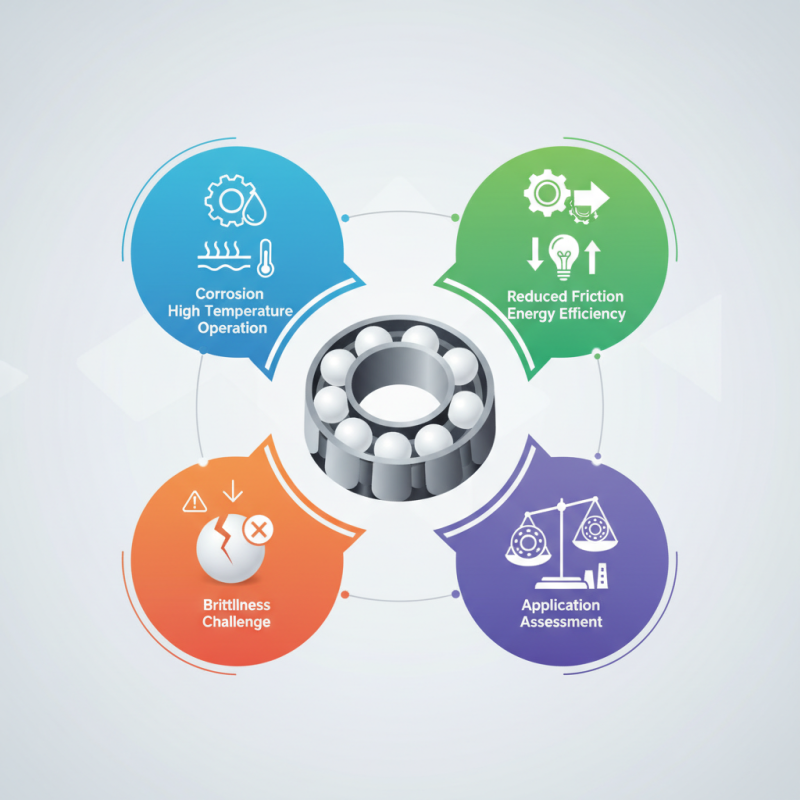
One of the standout features of Ceramic Ball Bearings is their exceptional corrosion resistance. Unlike steel bearings, ceramic options resist oxidation and wear, which prolongs their lifespan. They can operate at high temperatures, maintaining integrity where traditional bearings fail. A study from the American Society of Mechanical Engineers highlights that ceramic bearings can reduce friction by up to 50%. This reduction translates to greater energy efficiency, an essential factor in today’s competitive landscape.
While the benefits are clear, it's essential to acknowledge the challenges. Ceramic Ball Bearings can be more brittle than metal counterparts, leading to potential risks in certain applications. Users must carefully assess specific use cases to avoid premature failure. Balancing these strengths and weaknesses is crucial in maximizing the performance gains offered by these innovative bearings.
Advantages of Ceramic Ball Bearings in High Performance Applications
Ceramic ball bearings offer numerous advantages for high-performance applications. They are known for their lighter weight and increased durability. This results in less friction, which enhances efficiency. Furthermore, they can operate in extreme temperatures, making them suitable for various environments. Their resistance to corrosion also extends their lifespan and reduces maintenance needs.
In high-speed applications, ceramic ball bearings shine. They provide smooth operation, which contributes to higher speeds without overheating. This can lead to better overall performance in demanding situations. Users often find that these bearings help with noise reduction. The quiet operation is beneficial in settings where silence is crucial.
**Tip:** Consider the specific conditions when choosing ceramic ball bearings. Different applications may require different specifications. It’s essential to analyze the load and speed requirements.
**Tip:** Don't forget to assess your current bearings. An upgrade might not be necessary for all applications. Weigh the benefits against the costs. Make sure that the improvement justifies the investment.
Enhanced Durability: Comparing Lifespan of Ceramic vs. Steel Bearings
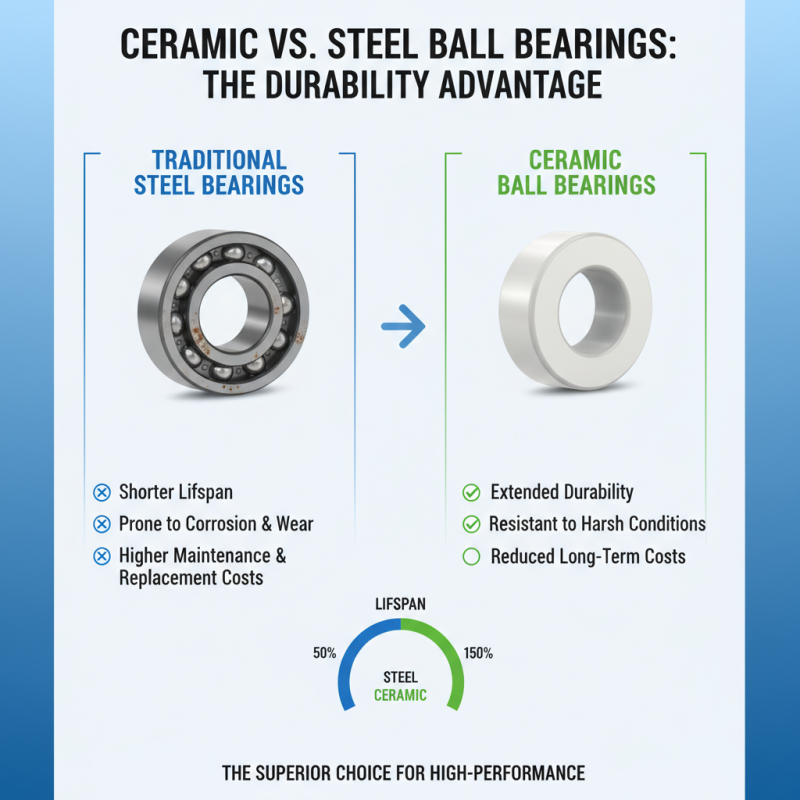
Ceramic ball bearings have become a popular choice for high-performance applications. Their durability is a key factor that sets them apart from traditional steel bearings. In many cases, ceramic bearings outlast their steel counterparts. They can endure harsher conditions without significant degradation. This leads to less frequent replacements and lower maintenance costs.
Ceramic materials are inherently more resistant to wear and damage. They do not corrode or rust, even in extreme environments. In contrast, steel bearings may suffer from rust and fatigue over time. However, some users report that ceramic bearings can be more brittle. This brittleness can lead to breakage under excessive stress. Proper handling and installation are crucial to avoid potential failures.
High-speed applications often reveal the advantages of ceramic bearings. They generate less heat and friction, enhancing overall efficiency. But it’s worth noting that not all ceramics perform well in every situation. Understanding the specific application and its requirements is vital. Users should weigh the pros and cons before making a decision.
Low Friction Coefficient: Impacts on Efficiency and Energy Savings
Ceramic ball bearings are known for their low friction coefficient. This characteristic significantly impacts efficiency and energy savings in high-performance applications. According to a report by the International Journal of Mechanical Engineering, ceramic bearings can reduce friction by up to 50% compared to traditional steel bearings.
The reduction in friction leads to decreased energy consumption. In manufacturing processes, machines equipped with ceramic bearings can operate with less power. This can mean substantial energy savings over time. For instance, a facility using these bearings might save thousands of dollars annually in energy costs. However, there are challenges as well. The initial cost of ceramic bearings can be higher, which raises concerns for some companies.
Moreover, while ceramic materials are robust, they can be more brittle than steel. This presents a trade-off: greater efficiency comes with the potential for fragility. Companies must weigh the benefits against the risks. Understanding these dynamics is essential. Balancing performance, cost, and durability will guide future choices in bearing technologies.
Top Benefits of Ceramic Ball Bearings for High Performance Applications
| Benefit |
Description |
Impact on Performance |
Energy Savings (%) |
Application Areas |
| Low Friction Coefficient |
Reduces resistance in motion |
Increases overall efficiency |
15-30% |
Aerospace, Robotics |
| High Temperature Resistance |
Performs well under extreme heat |
Maintains performance without degradation |
10-20% |
Manufacturing, Engines |
| Corrosion Resistance |
Resists wear in harsh environments |
Extends operational lifespan |
5-15% |
Marine, Chemical processing |
| Lightweight |
Reduces overall system weight |
Improves speed and efficiency |
12-25% |
Sports equipment, Automotive |
| Lower Noise Levels |
Quieter operation compared to steel |
Enhances user experience |
N/A |
Home appliances, HVAC |
Temperature Resistance: Operating Limits of Ceramic Ball Bearings
Ceramic ball bearings are ideal for high-performance applications due to their superior temperature resistance. They can withstand operating temperatures far beyond those of traditional steel bearings. This quality allows them to perform reliably in extreme conditions. For instance, they can function effectively at temperatures exceeding 1200°F (650°C). This level of heat resistance makes them suitable for various industries, including aerospace and automotive.
When using ceramic ball bearings, pay attention to the operating environment. High temperatures can cause unexpected wear if the bearings are not properly lubricated. Use appropriate lubrication to maintain performance. Additionally, monitor the temperature regularly. This helps to ensure that you are within the safe operating limits.
Consider the load conditions as well. Ceramic bearings can handle higher loads but are more brittle. Under extreme pressures, they may fail more abruptly than metal counterparts. Performing regular checks can help catch potential issues early. This proactive approach might prevent bigger problems later on.
Noise and Vibration Reduction: Benefits for Precision Machinery
Ceramic ball bearings are gaining popularity in high-performance applications. One of their key advantages is noise and vibration reduction. These bearings have unique properties that allow them to operate smoothly. They generate less friction, contributing to quieter machinery. This is especially important in settings requiring precision, like medical devices or aerospace engineering.
By minimizing noise, ceramic bearings enhance the user's experience. Vibrations can lead to inaccuracies in sensitive tools. With ceramic ball bearings, the machinery runs more reliably. Consequently, operational efficiency improves, resulting in better overall performance. However, the initial cost might be higher than traditional options.
It's worth noting that while ceramic materials are durable, they can be brittle. This aspect requires careful handling during installation. Users need to balance the benefits and challenges. Finding the right fit for each application may take time and experimentation. Despite the potential downsides, ceramic ball bearings present notable benefits for precision machinery, making them a worthy consideration.
Top Benefits of Ceramic Ball Bearings for High Performance Applications
This chart illustrates the various benefits of using ceramic ball bearings in high-performance applications, with a focus on their advantages in noise and vibration reduction, along with maintenance costs, operational lifespan, and efficiency gain.