What are the Benefits of Using Cylindrical Roller Bearings?
Cylindrical Roller Bearings are essential in many industrial applications. These bearings support radial loads and allow for high rotational speeds. According to Dr. Emily Johnson, an expert in bearing technology, "Cylindrical Roller Bearings provide unmatched efficiency and reliability in machinery." This statement highlights their crucial role in reducing friction and wear.
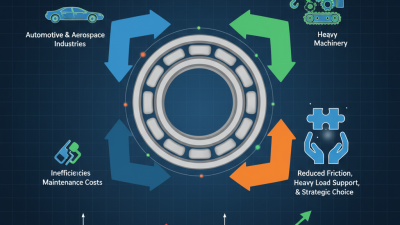
In industries like automotive and aerospace, the demand for durable and efficient components is increasing. Cylindrical Roller Bearings meet these needs by offering superior load distribution and minimizing vibration. Their design allows for easier maintenance as well. However, companies must carefully select the right specifications to avoid potential performance issues.
Despite the numerous benefits, some challenges remain. For example, improper installation can lead to premature failure. Users must prioritize precision in alignment and mounting. Overall, the advantages of Cylindrical Roller Bearings are clear, yet they require thoughtful implementation to maximize their potential.
Advantages of Cylindrical Roller Bearings in Machinery Applications
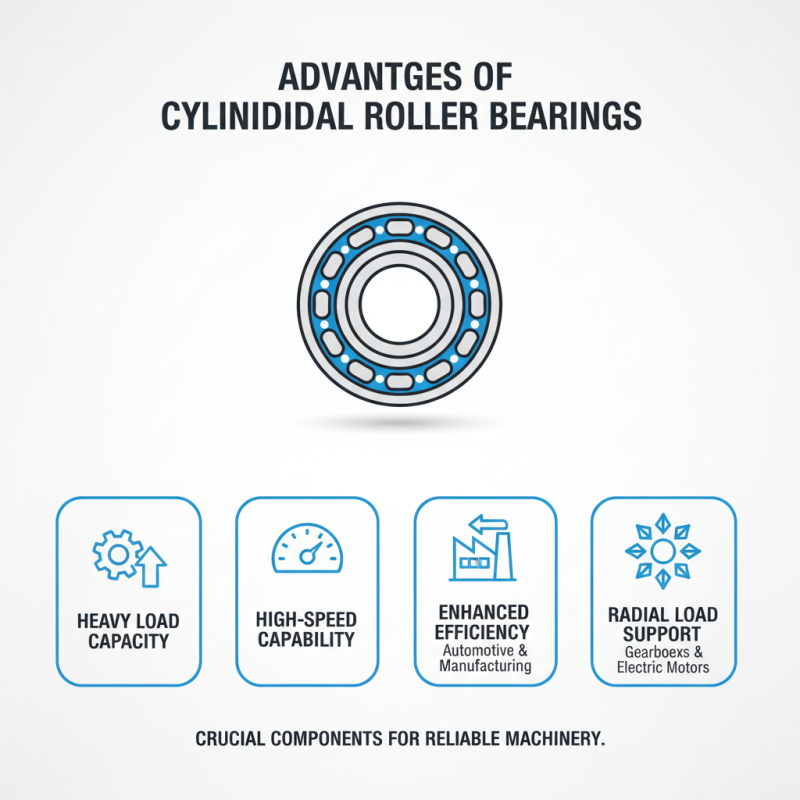
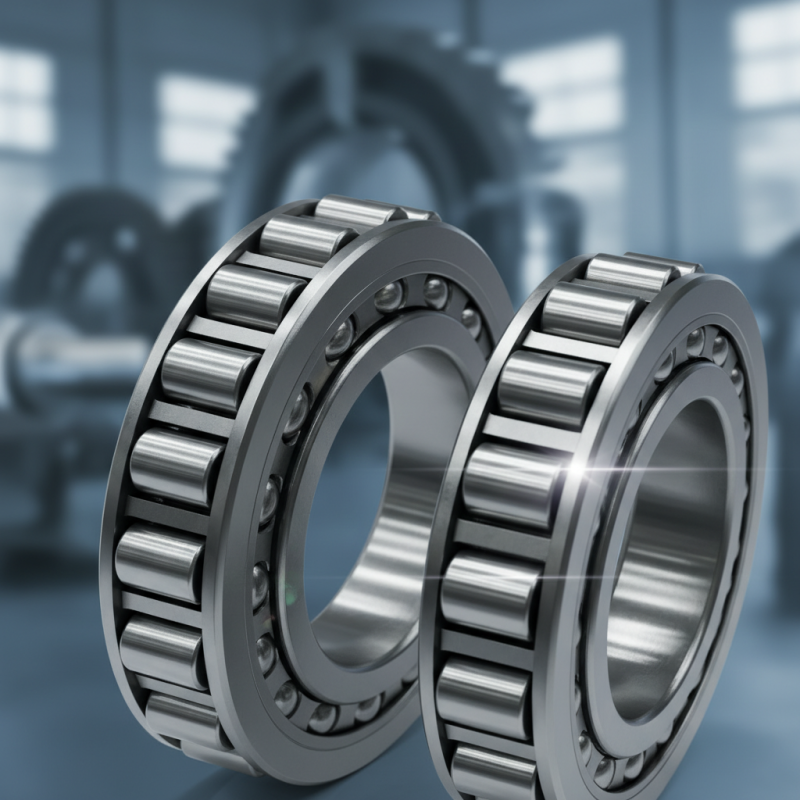
Cylindrical roller bearings have become crucial components in various machinery applications. Their design allows them to carry heavy loads while maintaining high speeds. This combination is vital for industries such as automotive and manufacturing, where efficiency is paramount. The ability to support radial loads makes them ideal for gearboxes and electric motors.
One notable advantage is their reduced friction. This leads to less heat generation during operation, enhancing performance and extending the lifespan of machinery. However, improper installation can lead to premature failure. Users must be diligent in following specifications to ensure optimal performance.
Additionally, cylindrical roller bearings offer greater alignment capabilities. This flexibility can be beneficial in complex machinery setups. Yet, they may not be the best choice in every scenario. It’s essential to evaluate specific application needs. Recognizing these nuances can significantly improve reliability and productivity in industrial operations.
Enhanced Load Capacity of Cylindrical Roller Bearings Explained
Cylindrical roller bearings are designed to handle heavy loads efficiently. Their unique shape features cylindrical rollers that increase the contact area with the raceway. This characteristic enables them to support higher radial loads compared to traditional ball bearings. Enhanced load capacity is crucial in many industrial applications, such as construction and manufacturing.
One notable advantage is their ability to accommodate misalignment and shaft deflections. This adaptability can lead to improved performance. However, it’s essential to consider the installation process. Misalignment during installation may negate some benefits. Regular maintenance checks can mitigate this risk, ensuring the bearings operate at their optimal capacity.
The material and design influence the load-bearing capabilities. High-quality materials can endure extreme conditions, including temperature variations and heavy pressures. Despite these strengths, challenges remain. Users must remain vigilant about wear and tear. Regular monitoring can help prevent unexpected failures, maximizing the bearing's lifespan.
Benefits of Using Cylindrical Roller Bearings
| Benefit |
Description |
Load Capacity (kN) |
Applications |
| High Load Capacity |
Cylindrical roller bearings can support heavier loads compared to other types due to their design and contact surfaces. |
150 - 900 |
Industrial machinery, heavy equipment |
| Reduced Friction |
Their cylindrical shape minimizes rolling resistance and improves efficiency. |
Varies by size |
Automotive applications, electric motors |
| High Stiffness |
They offer excellent rigidity with minimal deformation under load. |
200 - 1000 |
Construction machinery, aerospace |
| Versatility |
Suitable for both radial and axial loads, making them adaptable for various applications. |
120 - 800 |
Railway applications, high-speed machinery |
| Lower Maintenance Costs |
Their longevity and robust design lead to reduced frequency of replacement. |
150 - 850 |
Manufacturing, power generation |
Improved Operational Efficiency with Cylindrical Roller Bearings
Cylindrical roller bearings enhance operational efficiency in various machinery applications. These bearings have a high load-bearing capacity and can manage heavy radial loads, making them ideal for industrial environments. According to a recent report by the International Journal of Applied Science and Technology, using cylindrical roller bearings can improve machinery life by up to 30%. This is significant in reducing downtime and maintenance costs.
One interesting aspect is their design. The rollers maintain a line contact with the inner and outer rings. This design minimizes contact stress and can result in lower friction. Research from the American Society of Mechanical Engineers shows that wear rates decrease significantly, which leads to improved energy efficiency. However, engineers must consider proper lubrication and alignment to optimize these benefits.
Despite their advantages, cylindrical roller bearings require careful installation. Improper setup can lead to premature failure and operational issues. Maintenance protocols should be regularly reviewed to ensure peak performance. As the industry evolves, the ongoing examination of these components will remain crucial for advancing reliability and efficiency in machinery.
Reduced Friction and Wear: The Role of Cylindrical Roller Bearings
Cylindrical roller bearings are essential in reducing friction and wear in machinery. Their design allows for optimal load distribution. This results in less energy loss and better efficiency. Such bearings handle heavy loads effectively, making them suitable for various applications.
When friction is minimized, wear on components decreases. This can prolong the lifespan of machines. This is especially crucial in industries where equipment operates for long hours. However, not all cylindrical roller bearings perform the same. Factors like lubrication and installation play significant roles.
Neglecting maintenance can lead to issues. Issues may arise from poor alignment or debris accumulation. Regular inspections can prevent unexpected breakdowns. While cylindrical roller bearings are efficient, their reliability hinges on proper care. Adapting to challenges is key for maximizing their benefits.
Benefits of Using Cylindrical Roller Bearings
This bar chart illustrates the various benefits of using cylindrical roller bearings, highlighting the percentage impact of each benefit on overall performance. Reduced friction and lower wear rates significantly enhance the reliability and efficiency of machinery.
Versatility of Cylindrical Roller Bearings Across Industries
Cylindrical roller bearings are becoming increasingly popular in various industries due to their versatility. They can support heavy loads and allow higher speeds. According to a recent market report, the demand for cylindrical roller bearings is expected to grow by 4.5% annually through 2030. This growth is driven by advancements in manufacturing technologies across sectors like automotive, aerospace, and renewable energy.
In automotive applications, these bearings reduce friction and improve fuel efficiency. They are used in gearboxes, electric motors, and power tools. Their capacity to perform under extreme conditions makes them invaluable. However, some users find that improper installation can lead to premature failure. Awareness and training for technicians can mitigate this issue.
In the aerospace sector, cylindrical roller bearings face rigorous quality standards. They must endure harsh environments and high stress. When properly certified, they enhance the reliability of aircraft systems. Yet, the high costs of precision manufacturing can sometimes hinder widespread adoption. Industries must weigh these factors when integrating cylindrical roller bearings into their systems.