How to Choose the Right Angular Ball Bearing for Your Project?
Choosing the right Angular Ball Bearing can significantly impact your project's success. Renowned expert Dr. Emily Carter once said, "The right bearing turns potential into performance." Her insight highlights the importance of selection.
In every project, whether it's robotics or machinery, Angular Ball Bearings play a crucial role. These bearings allow for precise angular movement and support axial loads, making them indispensable. However, selecting the wrong type can lead to inefficiencies and unexpected failures. Factors like load capacity, size, and material can easily overwhelm a decision.
For instance, consider a high-speed application. The choice of Angular Ball Bearing must accommodate not just speed but also temperature variations. It’s easy to overlook these details in a rush. This is where understanding technical specifications becomes vital. It demands careful consideration. After all, a small miscalculation could lead to costly setbacks. Awareness and attention make a difference.

Understanding Angular Ball Bearings: Key Features and Benefits
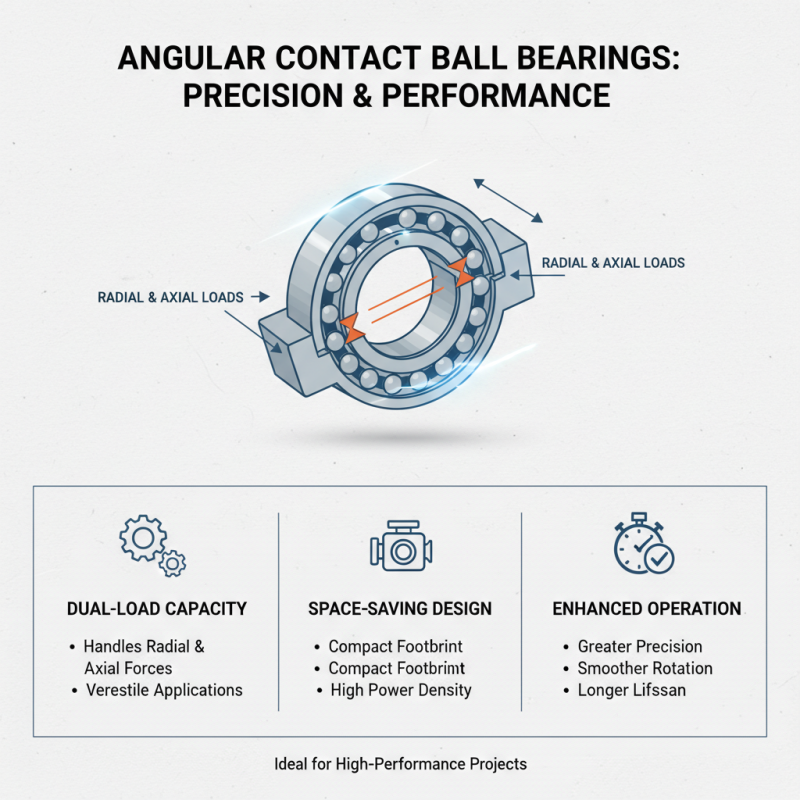
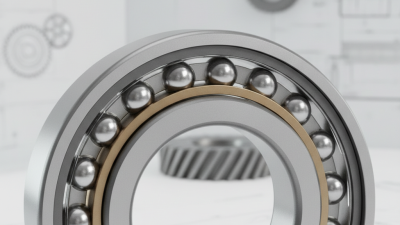
Understanding angular ball bearings is crucial for choosing the right one for your project. These components are designed to handle both radial and axial loads. They are typically used in applications where space is limited and performance is essential. Their unique design allows for greater precision and a smoother operation than regular ball bearings.
When selecting an angular ball bearing, consider its load ratings, dimensions, and material. The load ratings determine how much weight the bearing can support. Different applications may require different sizes. Material also affects durability and performance. Often, steel is used for strength, while ceramics can offer lower weight and reduced friction.
**Tips:** Ensure you measure the space accurately before purchasing. A fitting that is too tight or too loose can cause issues down the line. Check the angular contact angle, which impacts the bearing’s ability to manage thrust loads effectively. Balance performance with cost; sometimes, higher price does not guarantee better results.
Determining Load Capacity and Application Specific Requirements
When selecting an angular ball bearing for your project, understanding load capacity is crucial. It's not just about the size but also the forces it will face. Consider factors like static and dynamic loads. A bearing that can't handle the weight may fail early. Understand the load distribution across your assembly. More weight on one side can lead to quicker wear.
Application-specific requirements further complicate your choices. Look at the environment where the bearing will operate. Will it be exposed to dust, moisture, or extreme temperatures? These factors can influence material choice and design. Sometimes, you might overlook these details, leading to premature failures. Always ask yourself: “Is this suitable for my conditions?”
Don’t rush the decision-making process. A slight oversight in load capacity or environmental conditions can lead to costly mistakes later. Reflect on past projects. What went wrong? Use these lessons to guide your selection. A thorough evaluation can save time and money in the long run.
Load Capacity of Angular Ball Bearings
This chart illustrates the load capacity of different types of angular ball bearings based on their internal geometry and material used. The data represents the maximum dynamic load capacity in kilonewtons (kN).
Evaluating Material Composition and Surface Treatments
When selecting an angular ball bearing, the material composition is crucial. Different materials offer varied performance characteristics. For instance, steel bearings are robust and cost-effective. Yet, stainless steel bearings provide superior corrosion resistance. According to industry reports, about 70% of bearing failures stem from material fatigue. This is a significant factor to consider in harsh environments.
Surface treatments further enhance bearing performance. Coatings can improve wear resistance and reduce friction. A study found that treated bearings can extend operating life by 40%. However, not all coatings perform equally. Some may wear off quickly under high loads. This raises questions about their long-term viability in demanding applications.
Choosing the right combination of material and treatment isn't always straightforward. Testing the selected bearing in real-world conditions is essential. Yet, many projects overlook this step, leading to premature failures. It’s a complex balance between cost, performance, and environmental resistance. Understanding this can make or break your project’s success.
Assessing Tolerance Levels and Dimensional Accuracy Standards
When selecting angular ball bearings, assessing tolerance levels is crucial. Tolerance levels are measurements that indicate how much variation is acceptable in the bearing's dimensions. For instance, the ABEC (Annular Bearing Engineers’ Committee) rating system plays an essential role. An ABEC rating of 1 indicates basic tolerances, while a rating of 9 allows for very tight tolerances. This difference can impact performance.
Dimensional accuracy standards vary greatly depending on application needs. For example, high-speed applications may require tighter tolerances, often less than 0.01 mm. Conversely, lower-speed machinery may function adequately with a broader range, sometimes exceeding 0.1 mm. A study shows that bearings with tighter tolerances can increase efficiency by up to 20%. However, achieving these standards can be challenging. Manufacturing errors can lead to deviations that impact overall performance.
Consider the materials used in the bearing. High-quality steel can withstand higher loads, but it often comes with tighter tolerance requirements. Sometimes, this creates a dilemma. While aiming for optimal performance, balancing cost and availability of materials is essential. The quest for perfection may lead to over-engineering, resulting in unnecessary complexities. Understanding these aspects can aid in making a more informed choice tailored to specific project needs.
Comparing Cost, Reliability, and Maintenance Considerations
When selecting an angular ball bearing for your project, cost should be a primary consideration. Prices vary significantly based on size and material. It's essential to align your budget with the specific requirements of your application. Some users might opt for cheaper options, but this may lead to unpredictable results. Saving money upfront can sometimes result in higher costs later due to frequent replacements.
Reliability is another critical factor. Investigating product ratings can provide useful insights. If a bearing frequently fails, it's worth pondering how much downtime it may cause. Unreliable bearings can disrupt operations and lead to additional expenses. Take note of your project's environment. Factors like temperature, moisture, and load can affect performance.
Maintenance considerations cannot be neglected. Some angular ball bearings require regular lubrication and checks, while others are designed to be low-maintenance. Understanding your maintenance capacity is vital. Overlooking this can lead to early failure, forcing you to replace parts unnecessarily. It's crucial to find a balance between low-maintenance options and performance needs. Invest time in research; it can save money in the long term.