10 Essential Tips for Choosing the Right Grooved Ball Bearing?
Selecting the right grooved ball bearing is crucial for optimal performance in machinery. According to a report from the International Bearing Industry Association, the wrong choice can lead to increased downtime and maintenance costs. In industries where precision is key, bearings are often the unsung heroes that keep operations running smoothly.
Expert James Thompson, a leading authority in bearing technology, states, “Choosing the right grooved ball bearing can significantly impact your equipment's longevity.” This insight emphasizes the need for careful consideration. Various factors, like load capacity and rotational speed, play essential roles in this decision-making process.
However, not all choices are straightforward. The market is filled with options, making it easy to feel overwhelmed. Many may overlook details like material quality or manufacturer reputation. Reflecting on past experiences can lead to better choices. Understanding these elements is vital to avoid potential pitfalls in performance.
Understanding the Basics of Grooved Ball Bearings
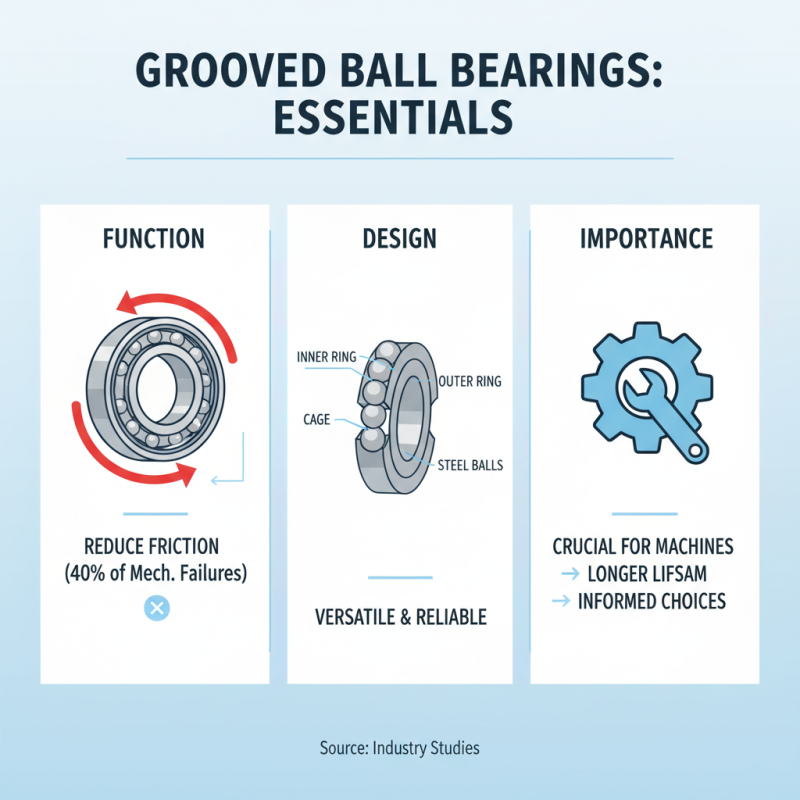
Grooved ball bearings are fundamental components in many mechanical applications. They assist in reducing friction between moving parts. Industry studies show that bearings account for about 40% of all mechanical failures. Understanding their basics is crucial for making informed choices.
These bearings come in various sizes and designs. The grooves on their races enhance alignment and load distribution. According to the International Journal of Mechanical Engineering, proper sizing can extend bearing life by up to 30%. Misalignment or inadequate lubrication can lead to premature wear.
Choosing the right grooved ball bearing isn't always straightforward. It requires knowledge of load specifications and operational speeds. Many users overlook material compatibility. This can result in unexpected failures. Data from the Bearing Research Foundation indicates that improper selection is a primary cause of equipment downtime. Users should carefully assess their needs to avoid costly mistakes.
Identifying Unique Application Requirements for Bearings
Choosing the right grooved ball bearing requires a deep understanding of your application needs. Different industries have distinct requirements. For example, high-speed applications demand bearings that can handle greater friction. In contrast, low-speed scenarios might prioritize durability and load capacity over speed.
Consider the environment where the bearing will operate. Will it face dust, moisture, or extreme temperatures? These factors influence material selection and design features. Stainless steel or plastic may be more appropriate in harsh conditions, while standard steel works well in controlled environments.
Understanding load types is essential too. Will the bearing face radial, axial, or combined loads? Underestimating load types can lead to premature failure. It’s also important to consider vibration and shock loads. These aspects are often overlooked but can greatly impact bearing performance. Regularly reassessing these unique requirements can lead to better durability and efficiency. Therefore, don’t just settle for the first choice; invest time in knowing your exact needs.
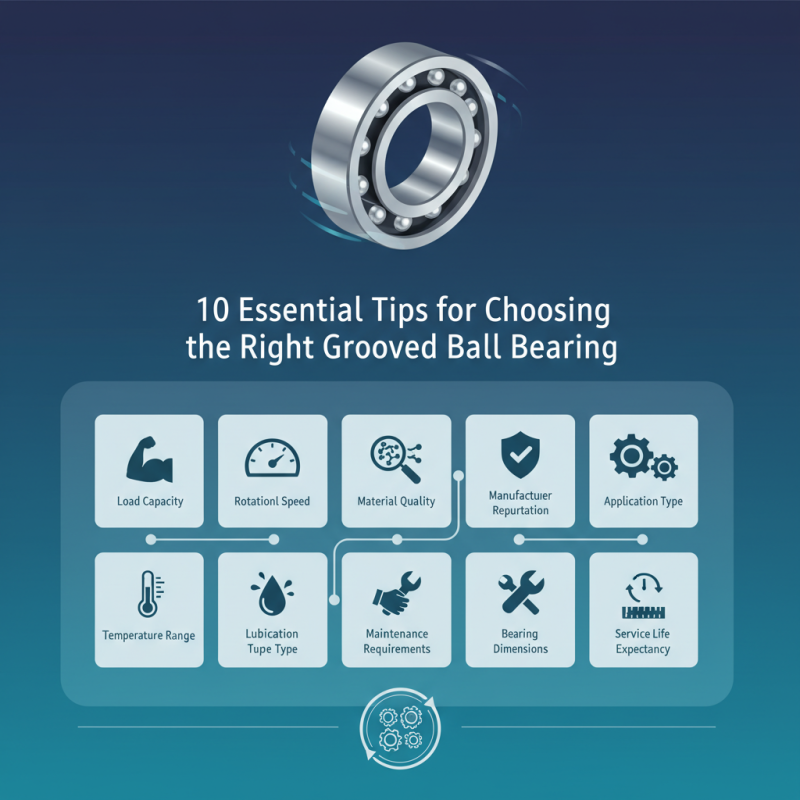
10 Essential Tips for Choosing the Right Grooved Ball Bearing
| Tip No. |
Tip Description |
Considerations |
Common Applications |
| 1 |
Identify Load Requirements |
Consider radial and axial loads |
Industrial machinery |
| 2 |
Determine Speed Ratings |
Ensure bearing can handle rotational speeds |
Electric motors |
| 3 |
Select Correct Diameter |
Match the inner diameter to shaft size |
Automotive applications |
| 4 |
Material Selection |
Consider environmental factors |
Aerospace |
| 5 |
Assess Lubrication Needs |
Choose between grease or oil |
Construction equipment |
| 6 |
Examine Tolerances |
Specify precision needed for application |
Medical devices |
| 7 |
Consider Temperature Range |
Choose bearings that can withstand operating temperatures |
Food processing |
| 8 |
Evaluate Sealing Options |
Determine if sealed or open bearings are required |
Pumps |
| 9 |
Check for Vibration Resistance |
Choose bearings that can minimize vibrations |
Railway systems |
| 10 |
Assess Cost vs. Performance |
Balance budget constraints with performance needs |
General manufacturing |
Evaluating Materials and Construction Quality in Bearings
When selecting a grooved ball bearing, the materials and construction quality play a crucial role. Bearings are made from various materials like stainless steel, chrome steel, and plastic. Each material has unique properties, affecting its performance and lifespan. For instance, stainless steel offers excellent corrosion resistance, while chrome steel provides superior load-carrying capacity. Choosing the wrong material can lead to premature wear and failure.
The construction quality is equally important. Look for precise machining and consistent surface finishes. Even small imperfections can lead to misalignment or increased friction. During installation, ensure the bearing fits snugly in its housing. A loose fit can lead to vibration, affecting performance. You can also evaluate the bearing's seals and shields. Quality seals help keep contaminants out, enhancing durability.
Understanding the specifications of the bearing is vital. Weight, dimensions, and radial play all affect functionality. The manufacturing process can vary widely, impacting overall quality. Gathering information about your bearing's manufacturer can be beneficial. However, not all manufacturers offer detailed insights. Researching feedback from users can unveil hidden issues. Always weigh the benefits of quality versus cost when making your decision.
Analyzing Load Capacity and Operating Conditions
When selecting a grooved ball bearing, load capacity and operating conditions are crucial. Each application demands different tolerances for weight and stress. Assessing these factors upfront can prevent costly failures later. Calculate the maximum load your bearing will face. Ensure that the bearing can handle these weights comfortably. This often means opting for a model with a higher load rating than needed.
Operating conditions also play a significant role. Is the environment wet or dry? What temperatures will the bearing experience? These elements affect lubrication and overall performance. If in doubt, consult material data sheets. Pay attention to the detail of each environment. Bearing lifespan can significantly drop if conditions aren't optimal. Keep in mind, a bearing that performs well in one setting may fail in another.
Balancing these factors is often complex and requires careful consideration.
Considering Maintenance and Lubrication Needs for Longevity
When selecting grooved ball bearings, one cannot overlook the importance of maintenance and lubrication. Proper lubrication is crucial for reducing friction and wear. Over time, failures can occur if not enough attention is given. The selection of lubricant must match the application's demands. Different environments require different lubricants. Temperature, load, and speed all play a role.
Routine maintenance helps detect issues early. Checking for signs of contamination is vital. Dust and debris can easily affect bearing performance. Regularly cleaning the bearings can extend their life. Reapply lubricant as needed and follow the guidelines for interval checks. It's essential to stay aware of the conditions each bearing operates in.
Ignoring these aspects can lead to problems later. For example, inadequate lubrication can result in overheating and premature failure. Don't assume that all bearings can run indefinitely without care. The right choice, combined with ongoing maintenance, makes a significant difference in longevity. Explore various lubricants, but remember not every option is suitable for every situation.