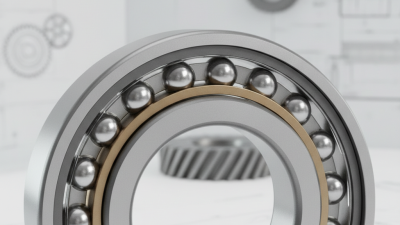
2026 Top V Groove Roller Bearing Types for Precision Engineering?
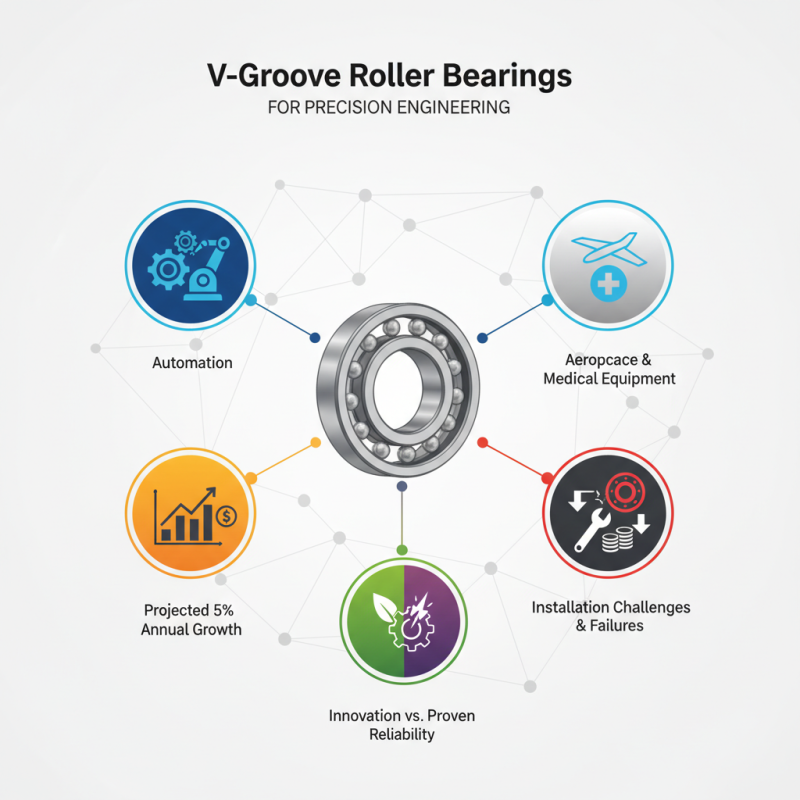
In the realm of precision engineering, the V Groove Roller Bearing plays a crucial role. Industries such as automation, aerospace, and medical equipment rely heavily on these components. Recent data indicates a projected growth rate of 5% annually for the bearing market, highlighting their significance. These bearings are designed to handle radial and axial loads, making them essential for various applications.
However, not all V Groove Roller Bearings are created equal. Manufacturers often face challenges in achieving the perfect balance of load capacity and durability. Reports indicate that improper installation can lead to premature failures, costing companies both time and money. Moreover, while some products boast high precision, real-world performance often reveals discrepancies. It’s vital for engineers to focus on quality control and material selection.
Innovative designs are emerging to enhance efficiency and reduce friction. Yet, there remain instances where older bearing designs still outperform newer alternatives under specific conditions. This prompts a reevaluation of the industry's push for constant innovation over proven reliability. The V Groove Roller Bearing, while seemingly straightforward, carries complexities that warrant deeper investigation.
Types of V Groove Roller Bearings and Their Applications
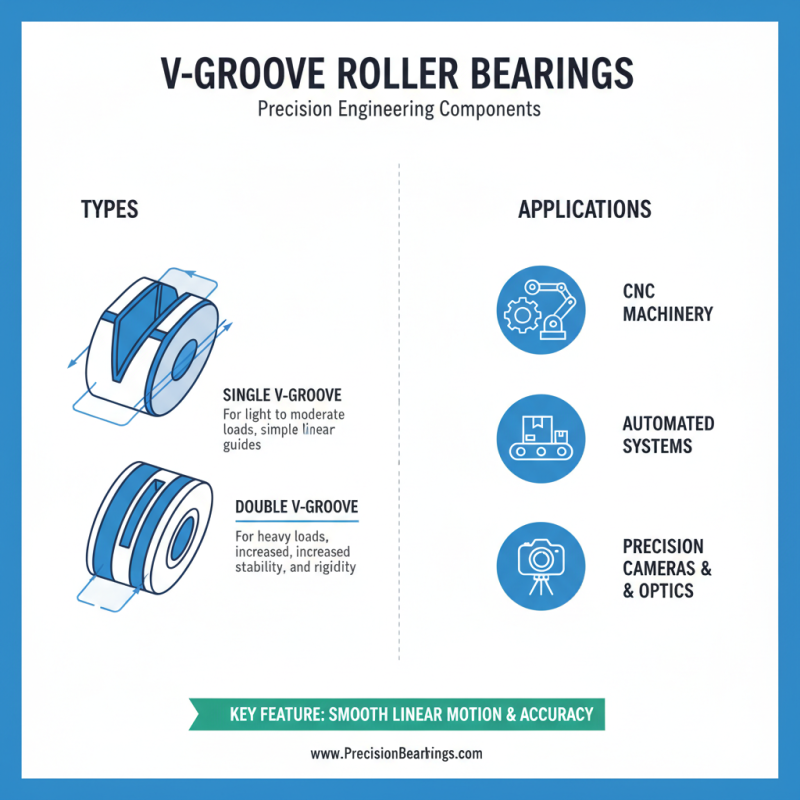
V groove roller bearings are essential in precision engineering. Their unique design allows for smooth linear movement along a rail. This feature is crucial in applications where accuracy is vital, such as CNC machinery.
These bearings often excel in automation systems. They can support heavy loads while maintaining low friction. This is particularly important in conveyor systems where continuous motion is required. However, the choice of material can impact their performance. Not all materials withstand wear equally, which can lead to premature failures.
Another application of V groove roller bearings is in sliding doors and gates. They provide a reliable and quiet operation. Yet, some designs may not offer enough durability for high-frequency use. An assessment of load capacity versus application demands is necessary. Reflecting on these aspects can ensure better reliability in engineering projects.
Key Features of Precision Engineering Bearings
Precision engineering relies heavily on high-quality bearings, particularly V groove roller bearings. These components are essential in smooth operation. They allow for precise movements in machinery, ensuring accuracy in engineering applications. A well-designed V groove roller bearing decreases wear and increases the lifespan of equipment.
Key features of precision engineering bearings include load capacity and performance under varying conditions. These bearings can handle radial and axial loads effectively. They are made from high-strength materials to improve durability. However, achieving perfect alignment is often a challenge. Minor inaccuracies in installation can lead to performance issues, affecting the whole system.
Another critical aspect is lubrication. Proper lubrication ensures optimal performance. It reduces friction and heat generation, but it can be messy or easy to overlook. Regular maintenance and attention to detail are required for long-term reliability. Understanding these features and potential pitfalls is vital for engineers to make informed choices in selecting the right V groove roller bearings for their applications.
Comparative Analysis of Top V Groove Roller Bearings
When comparing V groove roller bearings, precision is key. These bearings are crucial for applications that demand accuracy. They allow smooth movement along rails. In engineering, friction reduction is essential. Different types of rollers serve specific needs. Some offer better load capacity, while others excel in speed.
The materials used in these bearings vary. Common options include steel and plastic. Each material affects performance uniquely. Steel is stronger but heavier. Plastic is lightweight yet may wear faster under heavy loads. Engineers often grapple with these trade-offs.
Installation and maintenance also pose challenges. Proper alignment is vital for performance. Misalignment can lead to premature wear. Cleaning and lubrication require regular attention. These tasks, while straightforward, are often overlooked. Engineers should prioritize checking these aspects to ensure longevity.
Selecting the Right V Groove Roller Bearing for Your Project
When selecting the right V groove roller bearing for your precision engineering projects, it’s crucial to consider specific operational requirements. These bearings are essential for applications involving linear motion and low-friction environments. According to industry reports, precision bearings can improve efficiency by 15% in specific applications. The right choice can lead to significant performance gains.
Bearings come in various types and sizes, including deep groove and angular contact. It’s important to match the bearing type to the load and speed requirements of your project. A study by the Engineering Research Council found that improper selection can lead to a 25% decrease in lifespan. Many engineers overlook the load capacity and the operating temperature limits, which can affect performance.
Tips: Always review the bearing's load ratings and material specifications. Verify compatibility with your application’s environment. Check for any assembly requirements that might not be obvious. Remember, the wrong choice can lead to issues later. Balancing performance and cost is key, but don't ignore potential maintenance costs. Each project requires careful consideration, as even minor oversights can lead to significant problems.
Future Trends in V Groove Roller Bearing Technology
The V groove roller bearing technology is rapidly evolving. Engineers are increasingly focused on precision. Enhanced materials and designs are being introduced. These innovations aim to reduce friction and increase durability. The demand for high-performance bearings drives this trend.
Manufacturers are exploring advanced manufacturing techniques. Additive manufacturing is emerging as a game-changer. It allows for complex geometries that traditional methods cannot achieve. However, the learning curve is steep. Not every company has the capacity to adopt these technologies. This creates a disparity in the market.
Sustainability is also a hot topic. Eco-friendly materials are gaining popularity. Companies are searching for ways to minimize waste. Still, aligning sustainability goals with performance can be challenging. The future of V groove roller bearings is promising yet complicated. The key will be balancing innovation with practicality.