Why Choose Double Row Tapered Roller Bearings for Your Needs?
Choosing the right bearing is crucial for mechanical performance. Among various options, the Double Row Tapered Roller Bearing stands out. These bearings are specifically designed to handle high radial and axial loads efficiently. This unique design enhances stability, making them ideal for demanding applications.
One prominent feature of the Double Row Tapered Roller Bearing is its dual-row configuration. This aspect allows for better load distribution and improved durability over time. Users often notice increased reliability in systems such as automotive and industrial machinery. This reliability often stems from rigorous testing processes that ensure quality.
However, it is essential to reassess your needs continually. Not all applications demand the superior capabilities of a Double Row Tapered Roller Bearing. Evaluating factors such as load types and conditions is vital. A thorough understanding of these elements can guide you to the best choice tailored for your specific requirements.
Understanding Double Row Tapered Roller Bearings and Their Design Features
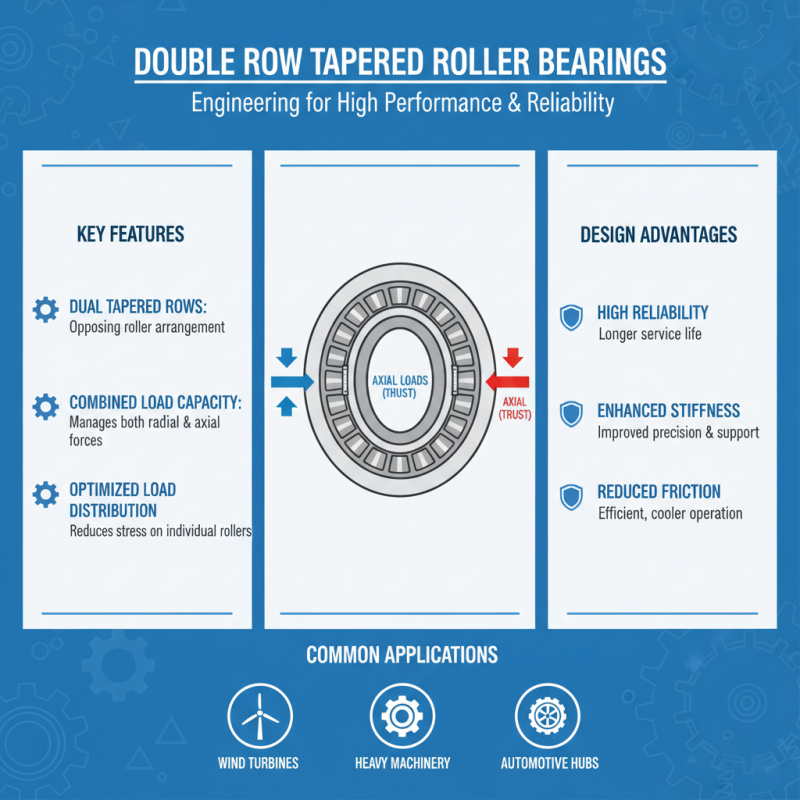
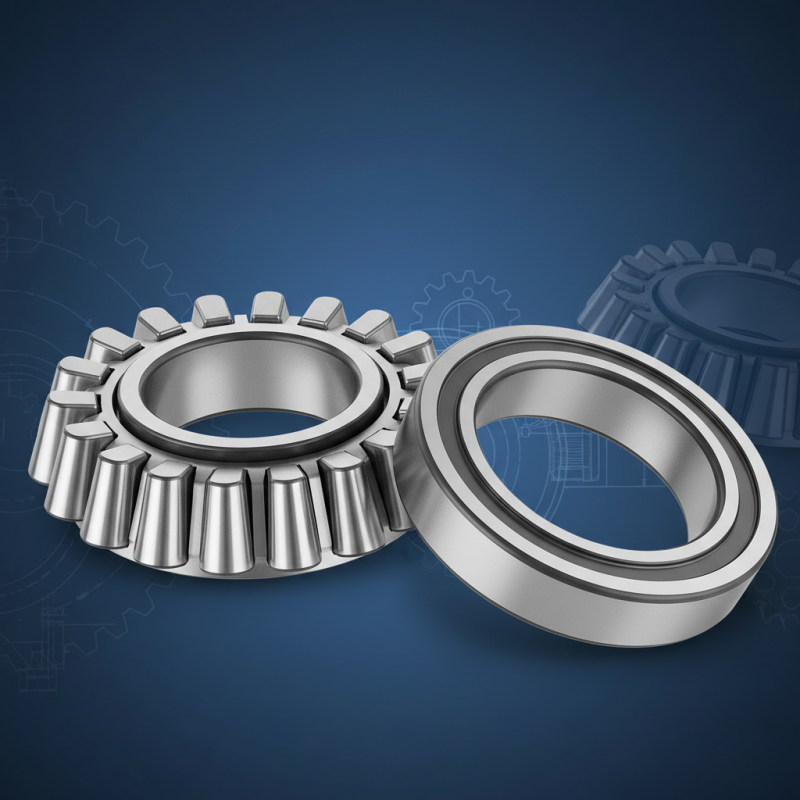
Double row tapered roller bearings are engineered to handle both radial and axial loads effectively. Their unique design features a pair of tapered rows, allowing for smooth and efficient performance. This configuration enhances load distribution, minimizing stress on individual rollers. In applications requiring high reliability, such as wind turbines and heavy machinery, this design is particularly advantageous.
Industry data reveals that double row tapered roller bearings can increase load capacity by up to 30% compared to their single row counterparts. This performance enhancement leads to longer service life and reduced maintenance costs. The robust structure is ideal for environments subject to heavy shocks and vibrations. Yet, one must consider potential drawbacks, like sensitivity to misalignment during installation, which can lead to premature failure.
Moreover, the manufacturing process involves high precision to ensure optimal contact between rollers and raceways. Even minor defects can impact their efficiency. It’s essential to use proper lubrication techniques to maintain performance standards. Failure to do so may result in increased friction and wear. By understanding these design features, users can make informed decisions tailored to their specific needs.
Key Advantages of Double Row Tapered Roller Bearings Over Other Types
Double row tapered roller bearings are gaining popularity in various industries. Their design optimizes load distribution, enhancing overall reliability. Industry reports indicate they can handle combined axial and radial loads effectively, making them suitable for heavy machinery and automotive applications. According to A&S Machinery Co., double row bearings can reduce wear and extend service life by 30% compared to single row designs.
These bearings excel in high-load environments due to their increased contact area. They are favored in sectors like construction and aerospace, where performance is non-negotiable. A study by the International Journal of Engineering Science found that the dual-row arrangement significantly stabilizes alignment, thereby reducing maintenance costs over time. However, these benefits come with a need for precise installation, which can be a challenge for some users.
Despite their advantages, double row tapered roller bearings are not without drawbacks. They can be more expensive than their single-row counterparts. This cost may deter some businesses, especially startups or those with budget constraints. Additionally, the complexity of assembly may require specialized knowledge or training. Understanding these factors is essential for making an informed decision.
Applications Where Double Row Tapered Roller Bearings Excel
Double row tapered roller bearings are renowned for their versatility and reliability in various applications. They provide a unique advantage in handling both radial and axial loads. This capability is crucial in industries such as automotive, mining, and construction. According to a report by Research and Markets, the global bearings market is projected to reach $200 billion by 2023, indicating a growing demand for high-performance components like double row tapered roller bearings.
In the automotive sector, these bearings are widely used in wheel hubs and transmission systems. They excel in conditions that require precise alignment and load distribution. A study from the American Bearing Manufacturers Association highlighted that over 50% of bearing failures result from inadequate load distribution. Thus, double row tapered roller bearings' ability to evenly distribute loads makes them an ideal choice.
For heavy-duty machinery, the reliability of these bearings can significantly impact operational efficiency. With rising maintenance costs, industries are looking for sustainable solutions. However, not all double row bearings are created equal. Factors such as lubrication and installation quality play a critical role in their performance. Understanding these nuances can help users make informed decisions when selecting bearings for their specific needs.
Factors to Consider When Selecting Double Row Tapered Roller Bearings
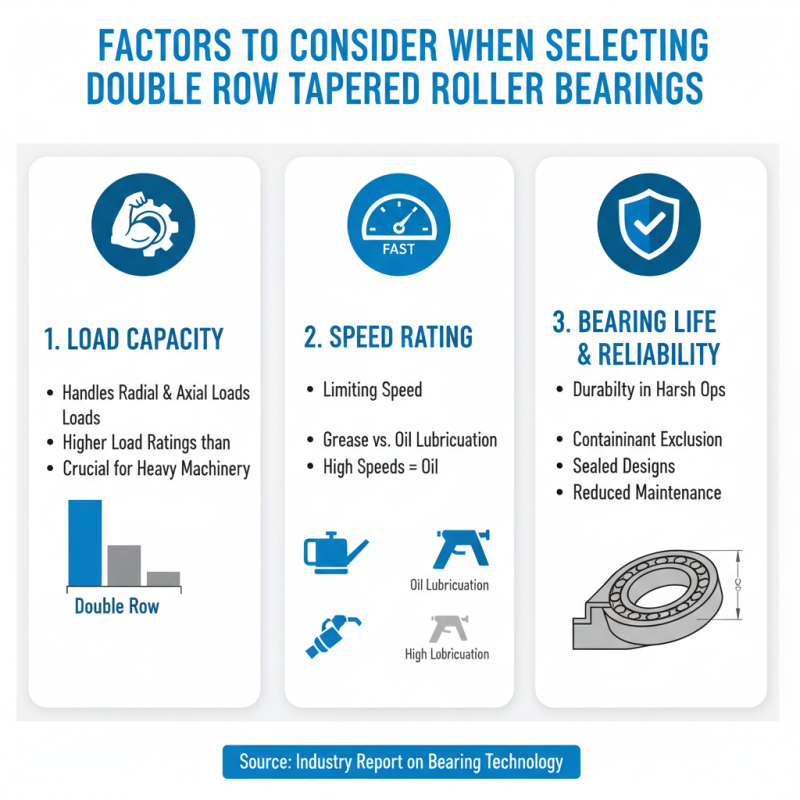
When selecting double row tapered roller bearings, several factors come into play. One of the primary considerations is load capacity. According to a recent industry report, these bearings can handle radial and axial loads effectively. Their design allows for higher load ratings compared to single row bearings. This aspect is particularly crucial in heavy machinery applications, where load demands are significant.
Temperature tolerance is vital as well. Many double row tapered roller bearings are designed to function optimally in various temperatures. A study shows that improper temperature management can lead to premature failure. Choosing bearings with adequate thermal properties can prevent malfunctions and costly downtime.
Finally, installation space should not be underestimated. Double row tapered roller bearings typically require more axial clearance than their single row counterparts. Understanding the specific space available can influence your choice. A gap that is too tight can lead to performance issues. Regular consultation with industry experts can provide valuable insights into these challenges, ensuring the selected bearings meet your operational needs.
Maintenance Tips to Enhance the Lifespan of Roller Bearings
Double row tapered roller bearings are known for their robustness and reliability. However, they require proper maintenance for optimal performance. Regular inspection is essential to detect any signs of wear. Look for uneven surfaces or unusual noises when the machine is operating. These signs often indicate that adjustments or replacements are necessary.
Lubrication plays a crucial role in extending the lifespan of roller bearings. Using the correct type and amount of lubricant reduces friction and prevents overheating. Over-lubrication can also be detrimental, leading to grease contamination. Maintenance schedules should include checking the lubricant condition and replenishing it as needed.
Environmental conditions affect bearing life too. High temperatures or exposure to moisture can accelerate wear. Keeping bearings clean and dry is vital. Sometimes, even minor debris can lead to significant issues over time. Regular cleaning reduces contaminants, ensuring smoother operation. Balancing attention to detail with practical maintenance routines can make a considerable difference in performance.
Why Choose Double Row Tapered Roller Bearings for Your Needs? - Maintenance Tips to Enhance the Lifespan of Roller Bearings
| Dimension (mm) |
Load Capacity (kN) |
Speed Rating (rpm) |
Recommended Lubrication (Type) |
Maintenance Tips |
| 30 x 62 x 24 |
25 |
4000 |
Grease |
Regular Alignment Checks |
| 35 x 72 x 30 |
35 |
3500 |
Oil |
Frequent Lubrication |
| 40 x 80 x 36 |
45 |
3000 |
Grease |
Vibration Monitoring |
| 50 x 110 x 43 |
60 |
2500 |
Oil |
Contamination Checks |