Leave Your Message

Why Choose Auto Bearing Manufacturers Worldwide?

Choosing Auto Bearing manufacturers worldwide is not simply a matter of comparing prices. It is a decision about motion, safety, durability, and trust. A bearing may look small in a vehicle assembly, yet it carries heavy loads beside heat, vibration, water, and road dust. Its performance can influence wheel movement, steering response, transmission efficiency, and maintenance costs. Small parts create large consequences.

Tribology expert Dr. Peter Jost defined the field clearly: “Tribology is the science and technology of interacting surfaces in relative motion.” His words explain why experienced manufacturers matter. They study friction, lubrication, material fatigue, sealing, and installation conditions together. Strong suppliers also invest in laboratory testing, digital quality control, and traceable production records. These practices help manufacturers match bearings with electric vehicles, passenger cars, commercial fleets, and demanding industrial applications.

Global sourcing can offer broader engineering experience and more stable supply options. It may also provide access to specialized coatings, quieter designs, and advanced heat-treatment processes. However, worldwide does not automatically mean better. No supplier is perfect. Buyers still need to verify certifications, test reports, dimensional accuracy, warranty terms, and technical support. A polished catalog is not enough. An honest evaluation should include field failures, replacement patterns, and actual operating temperatures.

The best Auto Bearing partner listens before recommending a product. It asks about speed, load, contamination, maintenance, and vehicle use. That practical conversation often reveals the real requirement. Reliable manufacturers do not merely sell bearings. They help reduce uncertainty, protect performance, and support long-term vehicle reliability across changing markets.
Why Choose Auto Bearing Manufacturers Worldwide?

What Are Auto Bearing Manufacturers and What Do They Produce?

Auto bearing manufacturers are specialized engineering companies that produce bearings for vehicles and transport equipment. Their products support rotating parts while reducing friction, vibration, and heat. Common examples include wheel hub bearings, tapered roller bearings, deep-groove ball bearings, and needle bearings. Some assemblies also include seals, flanges, or speed sensors.

Production begins with carefully selected bearing steel. Manufacturers shape rings and rolling elements through forging, turning, heat treatment, and precision grinding. Automated lines help maintain consistent dimensions, but skilled technicians still inspect critical surfaces. They measure noise, rotational torque, clearance, hardness, and load performance. Small defects matter. A rough raceway can create noticeable cabin noise after thousands of kilometers.

Experienced manufacturers also develop bearings for different vehicle conditions. A city car may need low-friction operation and compact packaging. Heavy vehicles require greater load capacity and stronger sealing. Vehicles used in cold regions, coastal areas, or dusty roads need protection against moisture and contamination. Reliable factories document material batches, machine settings, inspection results, and shipment records. This traceability supports quality investigations and long-term maintenance.

No production system is flawless. Temperature changes, tool wear, or assembly mistakes can affect results. That is why serious manufacturers review failed samples instead of hiding inconvenient findings. Their engineers compare laboratory data with field experience and adjust designs when necessary. Independent testing and clear technical documentation also help vehicle makers select suitable bearings for worldwide applications.
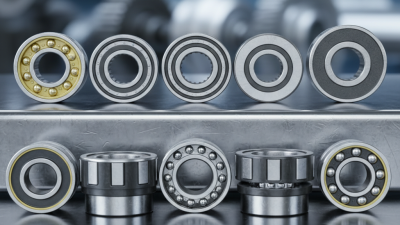
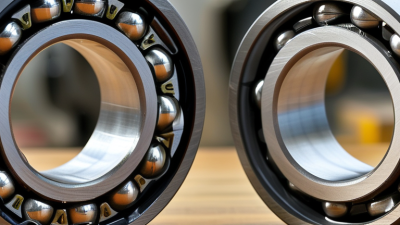
How Does the Global Auto Bearing Manufacturing Industry Operate?

How Does the Global Auto Bearing Manufacturing Industry Operate?

The global auto bearing industry follows vehicle production, replacement demand, and changing powertrain designs. OICA reported 93.5 million motor vehicles produced worldwide in 2023. This scale creates a tightly connected supply network. Steel producers supply bearing-grade material to forging and machining plants. Manufacturers then perform heat treatment, grinding, superfinishing, assembly, sealing, and inspection. Each stage affects friction, noise, durability, and safety.

Quality control is highly structured. ISO 281 provides methods for calculating bearing fatigue life, while IATF 16949 guides automotive quality management. Production teams measure roundness, surface roughness, vibration, and dimensional accuracy. They also maintain batch records for traceability. The IEA reported nearly 14 million electric cars sold globally in 2023, representing about 18% of new car sales. Electric vehicles create different bearing requirements, including lower noise and higher rotational efficiency. Some designs also face increased electrical and thermal stress.

The system is efficient, but not flawless. A supplier may meet dimensional limits while missing a subtle noise problem. Human judgment still matters. Global manufacturers therefore combine automated inspection, laboratory testing, supplier audits, and field feedback. Regional production can shorten delivery routes, although it may increase coordination risks. Forecasts are imperfect too. Aftermarket demand, raw-material prices, and vehicle technology can shift faster than factory plans. Reliable manufacturers respond with flexible capacity, documented processes, and engineers who investigate failure instead of hiding it.

What Benefits Do Worldwide Auto Bearing Manufacturers Offer?

Worldwide auto bearing manufacturers can offer broader engineering experience than a single local source. They serve vehicles operating in deserts, coastal cities, and freezing regions. That exposure helps them design bearings for dust, moisture, vibration, and changing temperatures. Buyers may also access different materials, seals, clearance options, and load ratings. These choices support passenger cars, trucks, agricultural vehicles, and industrial fleets.

A global manufacturer may provide stronger testing procedures and technical documentation. Useful records include dimensional reports, material certificates, noise readings, and fatigue test results. International production can also improve supply flexibility. If one facility faces delays, another location may help maintain deliveries. However, global sourcing is not automatically better. Long transport routes, communication gaps, and inconsistent inspection standards can create problems. I have seen specifications look complete while packaging details were overlooked. Small oversights can damage bearings before installation.

Tips: Compare test methods, not only prices. Confirm lubrication, sealing, tolerances, and storage conditions. Request sample inspections before large orders. Check production capacity and traceability records. A reliable supplier should explain failures clearly, even when the answer is uncomfortable. Local technical support also matters when unusual vibration appears after assembly. Short feedback loops often prevent expensive repeat repairs.

Which Factors Define a Reliable Auto Bearing Manufacturer?

Why Choose Auto Bearing Manufacturers Worldwide?

A reliable auto bearing manufacturer proves performance through repeatable evidence, not polished sales language. In practical sourcing, inspect material certificates, heat-treatment records, and dimensional reports. Clean bearing steel matters because tiny inclusions can grow into fatigue damage. Raceway accuracy also affects noise, vibration, and service life. Ask how each batch is measured. Vague answers deserve caution.

Production experience should appear in the details. A capable manufacturer controls grinding temperature, lubricant cleanliness, seal compression, and assembly pressure. Its engineers should explain load ratings under real conditions, including shock loads, speed changes, and contamination. Testing should cover endurance, temperature, noise, and rotational torque. Independent laboratory reports add useful authority, although they cannot replace factory audits.

Traceability is equally important. Each bearing should connect to a production batch, inspection record, and approved raw material source. Reliable suppliers maintain calibration schedules and investigate nonconforming parts. Their quality system may follow recognized standards, but a certificate alone proves little. Check its scope and current status.

Communication reveals operational maturity. Can the manufacturer provide technical drawings, packaging controls, and clear lead-time data? Do they respond precisely when specifications change? Not every supplier will fit every vehicle application. Some may offer excellent bearings but weak after-sales analysis. That limitation matters. A realistic evaluation should record defects, delivery delays, and corrective actions, rather than trusting a perfect first shipment. Small inconsistencies often speak loudly.

Why Choose Auto Bearing Manufacturers Worldwide? - Which Factors Define a Reliable Auto Bearing Manufacturer?

A practical comparison framework for evaluating automotive bearing manufacturers without relying on company or brand names.

Evaluation Dimension Reliable Manufacturer Practices Commonly Accepted Benchmark Why It Matters Recommended Verification
Quality Management Maintains documented production controls, inspection procedures, corrective actions, and traceable quality records. ISO 9001-certified quality management system or an equivalent independently audited system. Reduces process variation and provides a consistent method for handling defects and customer complaints. Request a current certificate, scope of certification, audit status, and sample quality records.
Automotive Process Capability Uses automotive-oriented risk analysis, process control plans, production-part approval methods, and controlled change management. IATF 16949 certification is a strong indicator when automotive original-equipment supply is required. Automotive applications require stricter traceability, risk control, and change notification than many general industrial uses. Confirm certification scope, relevant product experience, and the supplier’s approval and change-control process.
Material Control Controls steel, seals, lubricants, heat-treatment inputs, and other critical materials through approved suppliers and incoming inspection. Material certificates and lot-level traceability for critical components. Bearing fatigue life and dimensional stability depend heavily on steel cleanliness, hardness, geometry, and heat treatment. Review material certificates, heat-treatment records, supplier approval procedures, and retention periods.
Dimensional Accuracy Applies calibrated measurement systems to control bore, outside diameter, width, runout, internal clearance, and surface finish. Tolerance requirements should follow the applicable bearing standard, drawing, and application specification. Small dimensional deviations can increase vibration, noise, heat generation, and premature wear. Ask for inspection plans, calibration certificates, capability studies, and sample measurement reports.
Performance Testing Performs noise, vibration, torque, temperature, grease, seal, endurance, and application-specific validation tests. Test methods and acceptance limits are defined before production and linked to customer or industry requirements. Laboratory and production testing helps confirm that bearings perform under speed, load, temperature, and contamination conditions. Request validation plans, test conditions, equipment calibration records, and representative test results.
Product Range and Engineering Provides standard and application-specific bearing designs, technical drawings, load calculations, sealing options, and lubrication guidance. Technical recommendations are based on load, speed, temperature, contamination, mounting, and service-life requirements. The correct bearing configuration can improve service life, efficiency, noise performance, and installation reliability. Evaluate engineering response time, calculation methods, drawing accuracy, and prototype support.
Traceability and Anti-Counterfeit Control Uses batch codes, packaging controls, manufacturing records, and documented distribution channels. Every shipment should be traceable to a production lot and associated inspection records. Traceability supports recalls, root-cause analysis, warranty decisions, and protection against unauthorized products. Check lot markings, certificates of conformity, packaging security, and authorized supply-chain documentation.
Production Capacity and Continuity Maintains capacity planning, preventive maintenance, backup equipment, qualified personnel, and business-continuity procedures. Capacity commitments are supported by documented lead times, forecast processes, and contingency planning. Stable production reduces supply interruptions and supports consistent quality during demand changes. Review capacity evidence, average lead-time performance, minimum order quantities, and contingency arrangements.
Global Logistics Offers export documentation, protective packaging, shipment tracking, agreed delivery terms, and regional service coordination. Delivery performance is measured against confirmed dates, order quantities, and agreed documentation requirements. International customers need predictable delivery, compliant documents, and packaging that protects precision parts in transit. Request historical on-time delivery data, packaging specifications, export references, and escalation contacts.
After-Sales Support Provides installation guidance, failure analysis, warranty procedures, technical communication, and documented corrective actions. Nonconformity investigations use evidence, root-cause analysis, corrective action, and response deadlines. Fast technical support can prevent repeated failures, equipment downtime, and incorrect installation practices. Define warranty terms, response times, failure-analysis procedures, and required evidence before placing an order.
Environmental and Regulatory Compliance Controls restricted substances, manages waste and energy impacts, and supplies required regulatory declarations. Compliance should match the destination market and the customer’s applicable material and chemical requirements. Regulatory compliance supports lawful import, customer approval, responsible sourcing, and stable long-term supply. Request relevant declarations, environmental certificates, material disclosures, and supplier-code commitments.
Note: Benchmark requirements may vary according to bearing type, vehicle system, operating conditions, customer specifications, and destination-market regulations. Supplier claims should be confirmed through current certificates, test records, samples, audits, and documented performance data.

How Can Buyers Compare and Select Global Bearing Suppliers?

Why Choose Auto Bearing Manufacturers Worldwide?

How Can Buyers Compare and Select Global Bearing Suppliers?

Global sourcing offers broader engineering capacity, but supplier comparison requires evidence. OICA reported 93.5 million motor vehicles were produced worldwide in 2023. The IEA recorded nearly 14 million electric car sales that year. These trends increase demand for bearings that tolerate higher speeds, compact designs, and changing loads.

Buyers should compare manufacturers through measurable criteria. Check compliance with ISO 281 life-rating methods and request load, speed, clearance, and fatigue data. Ask for material certificates, heat-treatment records, dimensional inspection results, and batch traceability. A reliable supplier should explain testing equipment clearly. Samples should be tested under realistic temperature, vibration, and contamination conditions.

Price needs context. Compare total cost, not only the unit quotation. Review minimum order quantities, tooling charges, lead times, packaging, and replacement procedures. The World Bearing Association highlights counterfeit risks across international supply chains, so sealed packaging and document verification matter. A supplier with regional warehouses may reduce downtime, but storage claims still need proof. I would not accept impressive certificates without recent test records. That is an easy mistake. Reports from the IEA and OICA also show why electric and conventional vehicles need different validation priorities. Buyers should therefore match bearing design, testing depth, and after-sales support with the actual vehicle application, rather than selecting by country or price alone.

Why Choose Auto Bearing Manufacturers Worldwide?

How can buyers compare and select global bearing suppliers? A practical starting point is to verify whether each supplier publishes bearing ratings according to ISO 281. The chart shows the ISO 281 reliability factor used to adjust basic rating life for different reliability targets.

ISO 281 reference values: L10 represents 90% reliability, while higher reliability targets require a lower life adjustment factor. Buyers should compare suppliers using the same load-rating, operating-condition, testing, and documentation criteria.