Choosing the best Groove Ball Bearings from China requires more than comparing prices, brands, or polished product photos. According to Fortune Business Insights’ Bearings Market Report, the global bearings market was valued at approximately USD 118.7 billion in 2023. Asia-Pacific remained the largest regional market, supported by automotive, machinery, renewable energy, and industrial manufacturing demand. These figures show opportunity, but they do not guarantee supplier quality.
Tedric A. Harris, a leading rolling-bearing researcher, wrote, “The rolling bearing is a precision machine element.” That principle matters when evaluating Chinese manufacturers. Steel grade, heat treatment, internal clearance, raceway accuracy, seal design, noise control, and quality inspection can affect service life dramatically. A bearing may look perfect in a sample photograph. It may still fail under vibration, contamination, poor lubrication, or misalignment.
This guide examines Groove Ball Bearings through a practical sourcing lens. It considers manufacturer experience, ISO 9001 systems, material traceability, dimensional reports, load ratings, and export support. It also compares common Chinese brands with lesser-known factories, because the cheapest quotation is rarely the complete answer.
The evidence is not always consistent. Supplier catalogs may present different life calculations. Some test data may lack independent verification. That weakness deserves attention. Buyers should request samples, inspection records, and application-specific recommendations before placing large orders.
The goal is simple: identify reliable Chinese Groove Ball Bearings for real operating conditions, not merely attractive specifications.
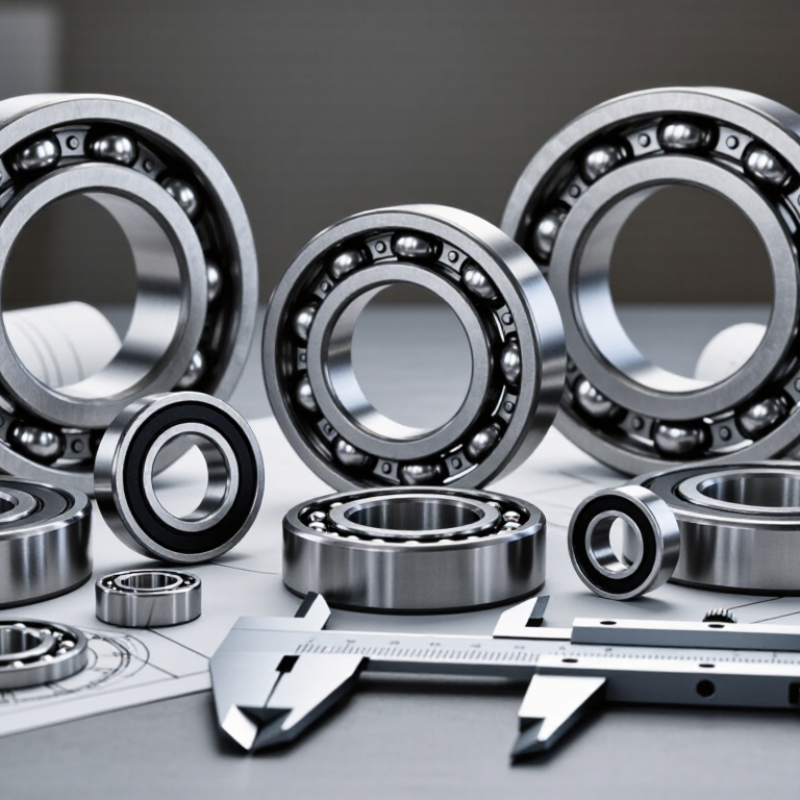
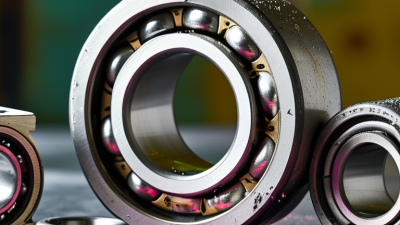
Deep-groove ball bearings are machine elements designed to reduce friction between rotating and stationary parts. They contain hardened steel balls between an inner ring and an outer ring. Curved raceways guide the balls smoothly around the bearing. A cage keeps each ball evenly spaced during rotation.
The design handles radial loads efficiently. It can also manage moderate axial loads from either direction. This makes it common in motors, pumps, fans, conveyors, and household equipment. Sealed versions retain grease and block dust or moisture. Open versions allow easier cleaning and relubrication. The wrong seal can still create excess heat.
When evaluating groove ball bearings from China, inspect more than the price. Ask for dimensional tolerances, steel specifications, heat-treatment records, and noise-test data. Raceway finish matters because rough surfaces increase vibration and shorten service life. In practical maintenance work, I check fit, preload, sound, and operating temperature before approval. A bearing may look perfect but fail under contamination or poor alignment. That detail is easy to miss.
Load ratings help compare designs, but they are not a promise of service life. Consider speed, temperature, lubrication, shaft accuracy, and housing stiffness together. Certificates from independent laboratories provide stronger evidence than a sales description alone. Sample testing is wise, although it adds time and cost. Even careful selection cannot correct an inaccurately machined shaft.
Deep-groove ball bearings use continuous raceway grooves to support radial loads and moderate axial loads in both directions. The best choice depends on the required load, speed, sealing, clearance, lubrication, and operating environment.
The chart shows standardized boundary dimensions for commonly used deep-groove ball-bearing series. Dimensions are nominal values in millimeters based on widely used ISO bearing size designations; they are not brand or company performance ratings.
China produces a broad range of groove ball bearings, especially single-row deep groove designs. These bearings support radial loads and moderate axial loads in motors, pumps, fans, and conveyors. Open, shielded, and contact-sealed versions are widely available. Sealed models are useful where dust reaches the housing.
Miniature bearings serve medical instruments, small motors, and office equipment. Stainless-steel versions resist moisture and mild chemicals. Ceramic hybrid bearings use ceramic rolling elements and steel rings. They reduce electrical damage risks in high-speed motors, but their price and installation demands are higher. Thin-section and flanged bearings also appear in compact automation equipment. They save space, sometimes at the cost of lower load capacity.
The China Bearing Industry Association reported China’s bearing industry sales revenue at about RMB 273 billion in 2023. Its statistics also covered millions of standard and specialized bearing units. A 2024 market report from Grand View Research estimated continuing global demand for deep groove bearings through 2030, driven by industrial machinery and electric vehicles. These figures show scale, not automatic quality. I have seen low-cost bearings fail early when lubricant selection, clearance, or sealing was ignored. That detail matters. Buyers should request dimensional inspection records, material certificates, noise testing, and conformity with ISO 492 and ISO 15. Some suppliers provide excellent traceability; others still leave gaps.
Choosing the best groove ball bearings from China requires more than comparing prices. Quality begins with traceable steel, controlled heat treatment, and accurate grinding. Ask suppliers for material certificates, inspection records, and production batch numbers. A serious factory should explain its process clearly. If answers remain vague, treat that as evidence, not a minor communication issue. I have learned that polished photographs prove very little. The bearing must perform under load.
Evaluate dimensional accuracy with calibrated gauges, not a ruler or visual check. Measure bore, outside diameter, width, and radial clearance against the required tolerance. Check raceway smoothness under bright light. Tiny grinding lines can become noise or early fatigue. Review hardness results and vibration data from the same batch. Seals should sit evenly, without twisting or exposed gaps. Rotate a sample by hand. It should feel smooth, not gritty.
Reliability also depends on testing that matches real service. Request endurance, temperature, noise, and contamination tests when your application demands them. Packaging matters too. Oily paper, sealed bags, and dry cartons help prevent corrosion during transport. Ask how rejected parts are controlled and whether records can be audited. Do not accept every certificate blindly. Independent sampling is wiser. A small pilot order can reveal inconsistent clearance or poor labeling before full production. No evaluation is perfect. Supplier claims need practical verification.
For buyers comparing Chinese groove ball bearing suppliers, the manufacturer matters more than a polished catalog. Reliable factories show stable steel sourcing, controlled heat treatment, and traceable inspection records. Ask for dimensional reports, noise data, and grease specifications before ordering samples. Small details matter. A bearing that feels smooth by hand may still fail under continuous load.
Experienced Chinese manufacturers usually serve distinct market levels: standard industrial bearings, custom sizes, or high-speed applications. The strongest suppliers explain tolerance classes, cage materials, sealing options, and expected service conditions clearly. They do not hide behind vague claims. Look for process evidence, not only certificates. A factory audit should review grinding equipment, assembly cleanliness, calibration records, and final sampling methods. Independent testing can confirm vibration, radial clearance, hardness, and rotational torque.
Cost remains attractive, but the lowest quotation deserves careful questioning. Cheap grease, inconsistent seals, or mixed batches can erase the initial saving. I would also test communication during a pilot order. Delayed answers often predict delayed corrective action. No manufacturer is perfect. Even capable suppliers may need clearer drawings or tighter incoming inspection. Choose the factory that documents weaknesses and corrects them openly. That habit is more valuable than impressive sales language.
Choosing the best groove ball bearing starts with the application, not the catalog price. Define the radial and axial loads, shaft speed, operating temperature, and available space. A bearing that handles a conveyor may fail quickly inside a high-speed motor.
Load matters most. Use a bearing with suitable dynamic and static load ratings. For dusty machinery, sealed versions reduce maintenance. In clean, hot equipment, shields or open designs may work better. Check internal clearance carefully. Excessive clearance can create vibration, while insufficient clearance may cause overheating. This detail is easy to overlook.
China offers many capable bearing manufacturers, but quality can vary between production lines. Request material specifications, dimensional tolerances, heat-treatment records, and inspection reports. Ask for samples before placing a large order. Measure bore, outer diameter, noise, and rotational smoothness. Test the bearing under realistic loads, not only by hand.
Small details matter.
During practical sourcing, I have seen a low-priced bearing perform well at moderate speed, then develop noise under continuous heat. The original selection ignored lubrication and temperature. That mistake was avoidable. Review grease type, sealing performance, corrosion resistance, and expected service hours together. Reliable suppliers should explain their testing methods clearly and provide traceable quality records. If their answers remain vague, keep comparing options. The best choice is the bearing that fits the whole operating condition, even when it is not the cheapest one.
The following comparison is intended for preliminary bearing selection. Actual performance depends on bearing size, load spectrum, lubrication, mounting accuracy, operating temperature, contamination, and supplier quality control.
| Selection Dimension | Available Option | Typical Technical Characteristics | Best Application | Key Selection Guidance |
|---|---|---|---|---|
| Bearing Type | Single-row deep groove ball bearing | Simple construction; supports radial loads and moderate axial loads in both directions. | Electric motors, pumps, fans, gearboxes, conveyors, and general machinery. | Use as the default choice when the shaft and housing are reasonably aligned and loads are not highly specialized. |
| Bearing Type | Stainless-steel deep groove ball bearing | Improved resistance to moisture and corrosion compared with standard bearing steel; generally lower load capacity than an equivalent-size standard steel bearing. | Food-processing equipment, laboratory equipment, outdoor mechanisms, and washdown environments. | Select only when corrosion resistance is more important than maximum load capacity. |
| Bearing Type | Full-complement deep groove ball bearing | More balls and no cage; provides high static and low-speed load capacity but normally has higher friction and lower maximum speed. | Low-speed, heavily loaded mechanisms and compact arrangements. | Avoid for high-speed operation unless the supplier provides verified speed and lubrication data. |
| Load Direction | Predominantly radial load | Deep groove ball bearings are primarily designed to carry radial loads. | Rotating shafts, rollers, pulleys, and electric motor rotors. | Choose a bearing with a sufficient dynamic load rating and adequate fatigue life for the required duty cycle. |
| Load Direction | Combined radial and axial load | Can accommodate moderate axial loads in both directions when the load angle and operating speed remain suitable. | Gearboxes, pumps, machine tools, and belt-driven equipment. | Check the ratio of axial load to radial load; use an angular-contact or tapered bearing if axial load is substantial. |
| Seal or Shield | Open bearing | Lowest friction and easiest relubrication; no integral protection against dust or moisture. | Clean housings with an external oil or grease lubrication system. | Use only when the surrounding machine provides effective contamination control. |
| Seal or Shield | Metal shields on one or both sides | Lower friction than contact seals; helps retain grease and limits entry of larger particles. | Clean, dry applications such as fans, motors, and office equipment. | A suitable choice when low friction and moderate contamination protection are required. |
| Seal or Shield | Contact rubber seals on one or both sides | Better protection against dust and moisture; seal friction and temperature rise are higher than with shields. | Conveyors, agricultural machinery, pumps, outdoor equipment, and dusty workshops. | Select a seal material compatible with the temperature, lubricant, chemicals, and expected speed. |
| Internal Clearance | Normal radial clearance | Standard internal clearance for ordinary loads, temperatures, fits, and operating conditions. | General-purpose machinery and typical room-temperature installations. | Use when there is no significant interference fit, temperature gradient, or shaft deflection. |
| Internal Clearance | Increased radial clearance | Allows for tighter interference fits, higher operating temperatures, or thermal expansion between the inner and outer rings. | Electric motors with tight fits, high-temperature equipment, and applications with substantial temperature differences. | Do not select increased clearance automatically; excessive clearance can increase vibration and reduce running accuracy. |
| Precision Class | Standard dimensional and running accuracy | Suitable for most industrial machinery and general rotating equipment. | Motors, pumps, fans, agricultural equipment, and standard gearboxes. | The most economical option when speed, noise, and runout requirements are moderate. |
| Precision Class | Higher precision class | Tighter dimensional tolerances and improved running accuracy; typically requires better shaft, housing, and mounting conditions. | Machine tools, precision spindles, inspection equipment, and high-speed rotating assemblies. | Higher precision does not compensate for poor alignment, contamination, incorrect fits, or inadequate lubrication. |
| Material | Through-hardened bearing steel | Common material for high load capacity, fatigue resistance, and standard industrial service. | Most industrial applications operating in a clean or moderately contaminated environment. | Request material certificates, hardness information, and heat-treatment records for critical equipment. |
| Material | Stainless bearing steel | Better corrosion resistance, with load and fatigue performance dependent on the specific stainless grade and heat treatment. | Humid, corrosive, washdown, and hygiene-sensitive environments. | Verify corrosion resistance, load rating, temperature capability, and lubricant compatibility rather than selecting by material name alone. |
| Operating Speed | Low to moderate speed | Generally offers a wide choice of seals, grease types, clearances, and cage designs. | Conveyors, rollers, agricultural machinery, and general mechanical systems. | Prioritize load capacity, sealing, service life, and contamination protection. |
| Operating Speed | High speed | Requires balanced components, suitable cage and lubricant, controlled friction, and accurate mounting. | High-speed motors, spindles, blowers, and precision rotating equipment. | Compare the supplier's reference speed and limiting speed under the actual seal, grease, temperature, and load conditions. |
| Temperature | Normal industrial temperature | Standard seals, cage materials, and grease are commonly suitable for moderate operating temperatures. | Indoor machinery and typical factory environments. | Calculate actual ring and grease temperatures rather than relying only on ambient temperature. |
| Temperature | Elevated or low temperature | May require special grease, heat-stabilized materials, reduced load or speed ratings, and suitable seal compounds. | Ovens, cold-storage systems, high-temperature fans, and specialized process machinery. | Confirm the allowable operating temperature of the complete bearing assembly, not just the steel rings. |
| Lubrication | Factory-filled grease | Convenient and generally maintenance-free for the expected grease life when the bearing remains properly sealed. | Sealed motors, fans, small gearboxes, and inaccessible installations. | Check grease type, fill quantity, compatibility, shelf life, and relubrication limitations. |
| Lubrication | Oil lubrication | Can dissipate heat effectively and support higher speeds when correctly designed. | High-speed gearboxes, turbines, compressors, and continuously operated equipment. | Verify oil viscosity, oil level, filtration, sealing arrangement, and minimum operating temperature. |
| Chinese Supplier Evaluation | Quality and process control | Important evidence includes dimensional inspection, noise and vibration testing, cleanliness control, heat-treatment control, and traceability. | All applications, especially safety-critical or continuously operated machinery. | Request inspection records, batch traceability, test reports, and samples before approving volume production. |
| Chinese Supplier Evaluation | Standards and documentation | Product dimensions, tolerances, load ratings, and test methods should be stated according to recognized bearing standards and clearly defined technical drawings. | OEM replacement, export machinery, and multi-supplier procurement. | Compare identical specifications; do not evaluate suppliers by price alone when ratings, seals, clearance, or materials differ. |
| Final Selection Priority | Balanced performance and total cost | The best bearing is the one that meets life, speed, noise, sealing, temperature, and maintenance requirements with consistent batch quality. | General industrial purchasing and long-term equipment programs. | Define the application first, then verify size, load ratings, clearance, seals, lubrication, tolerances, testing, and supplier capability. |