Leave Your Message

How to Choose Miniature Ball Bearings for Your Application?

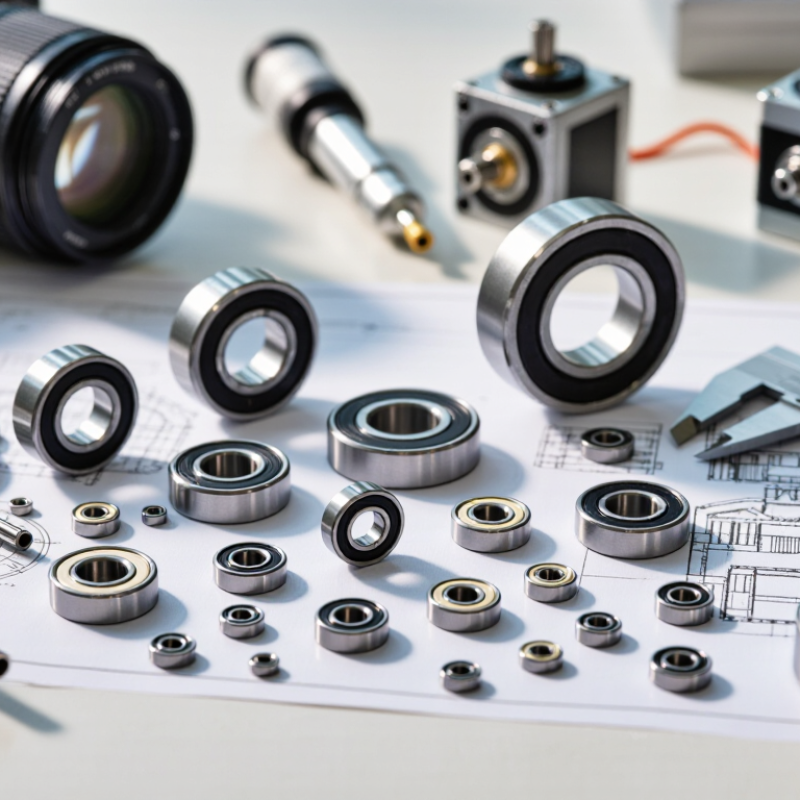
Selecting Miniature Ball Bearings is a small decision with significant consequences. These components may fit inside a camera lens, dental handpiece, robotic joint, or compact motor, yet they must handle demanding conditions. A bearing that looks suitable on paper can produce excessive noise, heat, or vibration in service. The real choice depends on more than bore diameter and outside size. Load direction, rotational speed, operating temperature, required life, mounting accuracy, and available space all deserve careful attention.

In practical design work, I start with the application rather than a catalog number. A bearing supporting a lightweight sensor needs different properties from one operating continuously at high speed. Radial loads, axial loads, shock, and misalignment should be evaluated separately. Very small details matter. A contaminated assembly may fail quickly, even with an excellent bearing. Seal type, lubricant compatibility, clearance, and material quality can change performance noticeably. Manufacturer load ratings and speed limits provide a useful foundation, but they are not guarantees. Test conditions often differ from real equipment. That matters.

Reliable selection combines engineering calculations with application testing and supplier verification. Check dimensional tolerances, noise grades, corrosion resistance, and traceable product documentation before approval. Ceramic or hybrid designs may reduce friction, but they can increase cost and require closer evaluation. Stainless steel may improve environmental resistance, though it is not automatically the best option. I have seen designs overcomplicate this choice. Sometimes, the simplest bearing works best. A careful review prevents expensive redesigns and improves confidence in the final assembly.

How to Choose Miniature Ball Bearings for Your Application?

Identify the Application’s Load, Speed, Space, and Motion Requirements

Choosing a miniature ball bearing starts with the application, not the catalog. Define radial and axial loads, then record their direction and duration. A 20-gram rotor can create a surprisingly high load when it spins off-center. ISO 76:2006 provides the basis for static load ratings, while ISO 281:2007 calculates basic rating life. For ball bearings, the life relationship uses the cube of the load ratio. Small load increases matter.

Speed requires equal care. Record continuous speed, acceleration, duty cycle, and expected temperature. A bearing rated for 30,000 rpm may perform poorly during frequent starts and stops. The U.S. Department of Energy reports that motor-driven systems consume about 68% of industrial electricity, according to its 2014 motor-system sourcebook. This makes friction and sealing choices relevant, even in compact equipment. Lower drag can help, but reduced protection may expose the raceway to dust.

Space and motion often decide the final size. Measure shaft diameter, housing bore, shoulder width, and allowable axial movement. Use a shield or seal only when contamination control justifies its drag. Oscillating motion needs different judgment than continuous rotation; false brinelling can develop before calculated fatigue life is reached. A neat calculation can still mislead. I would verify the choice with a prototype, temperature readings, noise checks, and several duty cycles. Real assemblies are rarely perfect. Misalignment, weak fits, and overlooked vibration can change the result.

Compare Miniature Bearing Types and Internal Configurations

How to Choose Miniature Ball Bearings for Your Application?

Miniature ball bearings differ in both structure and internal configuration. Deep-groove bearings suit combined radial and light axial loads. Flanged versions simplify axial positioning in compact housings. Thrust bearings handle axial force, but they perform poorly under substantial radial loading. Angular-contact designs support higher axial loads and require correct mounting direction. Small details matter.

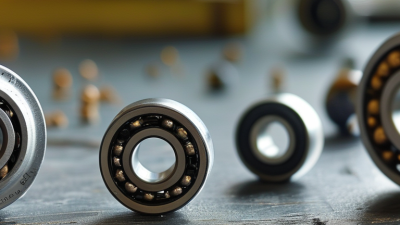
Internal configuration changes performance. Open bearings offer low friction and easier relubrication, but they need a clean environment. Shielded bearings reduce dust entry while maintaining relatively low running resistance. Sealed bearings provide stronger contamination protection, although their contact seals can increase heat and starting torque. Internal clearance also affects results. Excessive clearance may create vibration, while insufficient clearance can cause heat during rotation. A common mistake is selecting the smallest bearing without checking shaft fit, housing tolerance, speed, and load cycles.

Tips: Match the bearing type to the dominant load, then verify speed and temperature limits from technical data. Check whether axial movement, noise, or washdown exposure is expected. For a high-speed spindle, compare seal drag and cage stability carefully. For a dusty mechanism, protection may matter more than the last fraction of friction. Test the assembly under real operating conditions. Calculations help, but real misalignment can be less forgiving than the drawing suggests.

Select Bearing Materials, Shields, Seals, and Lubrication Options

Choosing miniature ball bearings starts with the environment, not the catalog dimensions. In compact instruments, stainless steel often resists moisture and mild chemical exposure better than standard bearing steel. Hardened steel may offer stronger fatigue performance under repeated loads. Ceramic balls can reduce friction and electrical conductivity, but they usually increase cost and may not suit shock loads. I have learned that choosing the lightest option is not always choosing the safest one.

Shields and seals control what enters the bearing and what remains inside. Metal shields create low friction and work well in clean, dry mechanisms. Contact seals provide stronger protection against dust, fibers, and light splashes. They also add drag. That small difference matters in miniature motors, where startup torque is limited. Measure the available space carefully. A seal that rubs against nearby parts can fail earlier than expected.

Lubrication needs equal attention. Use a grease or oil rated for the operating speed, temperature, and surrounding materials. Too much grease can increase heat and torque. Too little can cause noise, wear, and early damage. In a high-speed spindle, low-viscosity oil may perform better than heavy grease. In a slow actuator exposed to dust, sealed grease may be more practical. Test the bearing under real load, temperature, and duty cycles. Bench results can mislead. My own early selections sometimes focused too heavily on rated load, while contamination and starting torque caused the actual problem.

How to Choose Miniature Ball Bearings for Your Application? - Select Bearing Materials, Shields, Seals, and Lubrication Options
Selection Dimension Option Typical Characteristics Recommended Applications Important Considerations
Bearing Material Chrome steel rings and balls High hardness, good load-carrying capacity, good fatigue resistance, and generally economical. General industrial equipment, small motors, gearboxes, office equipment, and mechanisms used in clean indoor environments. Susceptible to corrosion when exposed to moisture, condensation, salt, or corrosive chemicals unless properly protected.
Bearing Material Martensitic stainless steel Better corrosion resistance than chrome steel while retaining useful hardness and rolling-contact performance. Laboratory instruments, food-processing equipment, medical mechanisms, outdoor devices, and applications exposed to occasional moisture. Usually has lower hardness and load or fatigue performance than equivalent chrome-steel bearings; verify the manufacturer's rating.
Bearing Material Ceramic hybrid construction Typically uses ceramic balls with metal rings; offers low density, electrical insulation through the rolling elements, low friction, and high speed capability. High-speed spindles, precision instruments, electrically charged equipment, and applications requiring reduced centrifugal forces. Higher purchase cost; ceramic balls do not eliminate the need to select suitable rings, lubricant, preload, and contamination protection.
Bearing Material Full ceramic construction Nonmetallic rolling elements and rings provide excellent corrosion resistance, electrical insulation, and suitability for some chemically demanding environments. Specialized laboratory, vacuum-compatible, chemical, and electrically isolated mechanisms. More brittle and substantially more expensive than steel or hybrid designs; use only after checking load, shock, mounting, and speed requirements.
Shield or Seal Open bearing No integral protection; produces the lowest sealing friction and allows direct access for cleaning or relubrication. Clean, enclosed mechanisms where contamination is controlled and the bearing can be lubricated by the surrounding system. Provides no protection against dust, liquid, or lubricant loss; usually unsuitable for exposed or dirty environments.
Shield or Seal Metal shield Non-contact shield that limits entry of larger particles and helps retain grease while generating relatively low friction. Clean or moderately dusty applications, small motors, fans, instruments, and higher-speed mechanisms. Not intended as a liquid-tight barrier. Clearance between the shield and inner ring can permit fine contamination or moisture to enter.
Shield or Seal Contact rubber seal Creates a stronger barrier against dust and moisture than a shield, but contact with the inner ring increases friction and heat generation. Dirty, humid, splash-prone, or outdoor applications operating at moderate speeds. Check maximum speed, seal material compatibility, temperature range, and starting torque before selection.
Shield or Seal Non-contact rubber seal Provides better contamination protection than an open bearing with less friction than a contact seal. Applications requiring a balance between moderate protection and relatively low running torque. Sealing performance is generally lower than that of a contacting seal, especially against liquid contamination or pressure differentials.
Lubrication Pre-greased miniature bearing Factory-filled grease simplifies installation and provides a controlled lubricant quantity for many maintenance-free applications. Small motors, fans, appliances, instruments, and mechanisms where relubrication is difficult. Grease type, fill quantity, operating temperature, speed, and storage life must match the application; avoid mixing incompatible greases.
Lubrication Low-viscosity oil Usually produces low churning losses and low friction, making it suitable for higher-speed operation. High-speed instruments, precision spindles, miniature fans, and mechanisms requiring low starting and running torque. Oil can migrate or drain away more easily than grease and may require a controlled oil-air, oil-mist, or relubrication system.
Lubrication General-purpose mineral-oil grease Provides a practical balance of load-carrying ability, protection, lubricant retention, and cost. Common industrial miniature-bearing applications at moderate speeds and temperatures. Confirm the base oil viscosity, thickener type, consistency, temperature limits, and compatibility with seals and surrounding materials.
Lubrication Synthetic grease Can provide improved low-temperature performance, oxidation resistance, or high-temperature capability depending on its formulation. Wide-temperature equipment, long-life mechanisms, aerospace-related instruments, and applications with difficult maintenance access. Synthetic grease is not automatically compatible with every existing lubricant or seal; verify compatibility before filling or relubricating.
Operating Speed Low to moderate speed Allows a broader choice of seals and grease fills because frictional heat and lubricant churning are generally less severe. Linear actuators, compact gear drives, hinges, small pumps, and general mechanisms. Evaluate load, shock, duty cycle, and contamination in addition to rotational speed.
Operating Speed High speed Requires careful control of friction, heat generation, balance, clearance, preload, and lubricant quantity. Spindles, miniature turbines, high-speed fans, dental or laboratory instruments, and precision rotating assemblies. Open or shielded designs may reduce friction, but they require a clean environment and suitable lubrication. Contact seals may reduce allowable speed.
Environment Dust or abrasive particles Contamination can create raceway dents, abrasive wear, noise, torque increase, and premature fatigue. Use a contacting seal, external shielding, or a protected bearing housing where practical. Improve the surrounding enclosure and cleanliness; a seal alone cannot compensate for severe contamination or poor installation practices.
Environment Moisture or water splash Water can cause corrosion, lubricant degradation, and surface fatigue damage. Corrosion-resistant bearing material combined with an appropriate contact seal and water-resistant lubricant. Verify chemical compatibility, drainage, washdown conditions, and whether the application requires additional external protection.
Temperature Low-temperature service Lubricant viscosity rises as temperature falls, increasing starting torque and reducing available speed. Outdoor instruments, cold-storage equipment, and low-temperature actuators. Select a lubricant formulated for the minimum temperature and confirm that seal materials remain flexible.
Temperature High-temperature service Heat accelerates lubricant oxidation, reduces viscosity, and may affect seal elasticity and bearing clearance. Ovens, heated instruments, high-temperature actuators, and equipment near heat sources. Check the actual bearing operating temperature, not only the surrounding air temperature; consider heat transfer through the shaft and housing.
Electrical Conditions Electrical current through the bearing Current can cause electrical erosion, fluting, noise, and premature raceway damage. Motors, generators, and systems using variable-frequency drives where shaft currents may occur.
Precision and Fit High-precision or low-noise mechanism Requires controlled radial clearance or preload, accurate fits, clean assembly, and appropriate lubricant quantity. Optical instruments, encoders, medical devices, precision stages, and low-noise motors. Excessive interference, misalignment, contamination, or over-greasing can increase torque, heat, vibration, and noise.
Selection note: Confirm the bearing size, radial and axial loads, speed, temperature, duty cycle, mounting fits, allowable torque, contamination level, and required service life before final selection. Performance values vary with bearing geometry, internal clearance, preload, lubricant, and operating conditions.

Calculate Load Capacity, Service Life, Tolerance, and Performance

How to Choose Miniature Ball Bearings for Your Application?

Miniature ball bearings should match the actual load, speed, and installation space. Start by separating radial and axial forces. Convert them into an equivalent dynamic load, P, using the bearing geometry and load direction.

For ball bearings, estimated L10 life is L10 = (C/P)3 million revolutions, where C is the dynamic load rating. This figure predicts when 90% of identical bearings may survive, not a guaranteed replacement date. Real conditions can be less forgiving.

Static capacity also matters. Check the static safety factor when the bearing starts under load or faces shock. A heavy press fit can reduce internal clearance and raise friction.

Choose the tolerance class according to shaft accuracy, housing fit, temperature, and required runout. Tight tolerance is not automatically better. It can increase cost and make assembly less tolerant of small errors.

Service life depends on more than calculations. Use suitable lubrication for the operating speed and temperature range. Keep dust, moisture, and cleaning chemicals away from the raceways.

In a compact mechanism, listen for rising noise and measure vibration after installation. A calculator may predict long life, yet poor alignment can end it quickly.

I have seen careful designs fail because the housing bore was slightly distorted. Recheck the fit, load direction, and clearance under real operating conditions. Performance is proven through testing, not numbers alone.

Verify Environmental Compatibility, Installation Needs, and Maintenance Requirements

How to Choose Miniature Ball Bearings for Your Application?

Verify Environmental Compatibility, Installation Needs, and Maintenance Requirements

Check the bearing’s real surroundings, not just the room’s average temperature. A miniature bearing near a washdown nozzle, dusty guide rail, or warm motor may face moisture, particles, or heat spikes. Match materials, seals, and lubricant to those conditions. Seals can keep contamination out, but added contact friction may affect speed and temperature. There is a trade-off. Record operating temperature and exposure patterns; a brief splash and continuous condensation are not the same problem. ISO 281 defines basic rating life at 90% reliability under stated operating conditions. That figure is a calculated baseline, not a promise of service life in a contaminated assembly.

Installation details matter just as much. A shaft that is slightly oversized can reduce internal clearance; a tilted press tool can damage a raceway before the machine even runs. Use clean fixtures, support the correct ring, and follow the bearing maker’s specified fit and mounting force. Check shaft and housing tolerances against the application drawing rather than relying on feel. A quiet spin by hand is useful, but it cannot confirm alignment under load.

Plan maintenance around the actual duty cycle. For relubricatable designs, verify lubricant type, quantity, and interval; too much grease can generate heat in a small cavity. Sealed units may need replacement rather than relubrication. Track noise, temperature, and vibration at commissioning, then compare readings over time. Small changes are easy to miss. Honestly, maintenance intervals may need adjustment after the first few weeks of real operation.

How to Choose Miniature Ball Bearings for Your Application

Compare bore and outside diameters for common 623–629 deep-groove bearing sizes. Confirm the required load capacity, material, lubrication, sealing, operating environment, fit, and maintenance access before selecting a bearing.

Dimensions shown are nominal boundary dimensions in millimeters for standard 623–629 bearing sizes; check the supplier’s specification for the exact bearing variant.