Global buyers are paying closer attention to compact motion components. The reason is simple. Small bearing failures can stop conveyors, gates, linear guides, and automated equipment. A U Groove Bearing supports this movement through its rounded outer raceway, which follows V-shaped or rounded tracks with controlled contact.
The global bearings market continues to expand. Fortune Business Insights reports a market value exceeding USD 130 billion in 2024, with further growth expected through 2032. MarketsandMarkets also identifies automation, robotics, electric vehicles, and industrial machinery as major demand drivers. These reports do not isolate the U Groove Bearing segment. That limitation matters. Buyers should avoid treating broad market forecasts as product-specific evidence.
As bearing specialist Tedric A. Harris wrote, “The rolling bearing is a precision machine element.” This principle remains practical. Groove accuracy, radial clearance, seal quality, hardness, lubrication, and installation tolerances can change service life dramatically. A low price may hide poor roundness or inconsistent heat treatment.
This guide reviews ten U Groove Bearing suppliers serving international buyers. It considers manufacturing experience, technical documentation, quality systems, customization, sample support, and delivery capability. ISO 281 life calculations and ISO 9001 certification can strengthen supplier comparisons, but certificates alone prove little. Ask for inspection records.
Some suppliers explain too little. Others promise too much. That deserves reflection. A serious evaluation should compare actual load data, track dimensions, operating speed, corrosion exposure, and maintenance conditions. The strongest supplier is not always the largest one. It is the one that can demonstrate repeatable performance, traceable materials, and responsive engineering support.
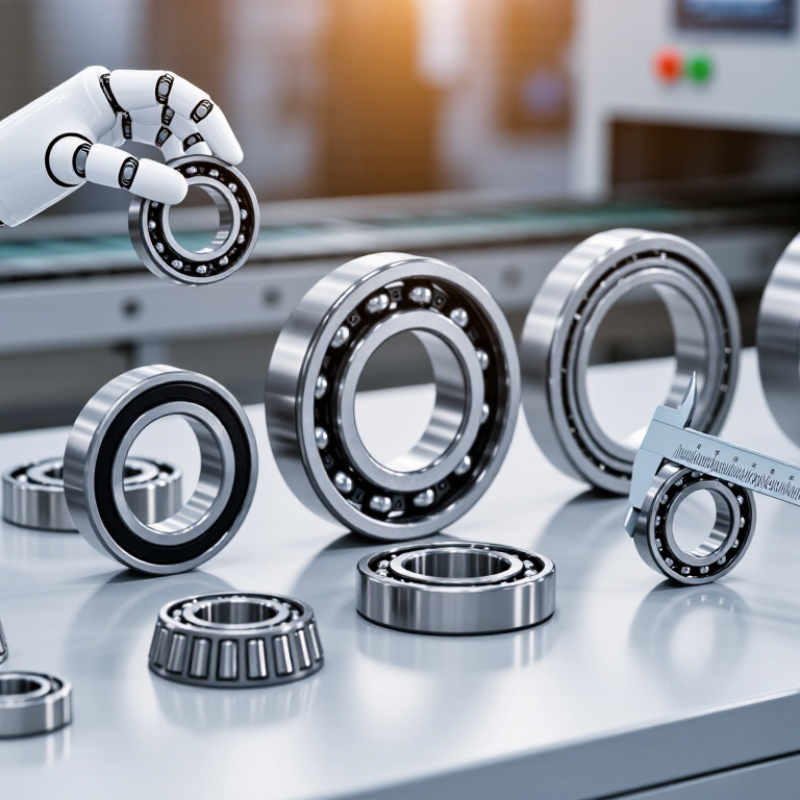
A U groove bearing is a rolling-element bearing with a concave track machined around its outer ring. It guides wheels, rollers, or cables that sit inside the groove. The profile helps maintain alignment while reducing sliding friction. In practical assemblies, two sealed bearings may support a small carriage on a steel rail. The inner ring rotates on balls, while the outer groove follows the track. This arrangement can handle radial loads and limited axial forces, depending on clearance and installation.
Core functions include guided movement, load distribution, and reduced contact wear. The groove captures the mating track, limiting sideways drift during repeated travel. Seals retain lubricant and keep dust away from the raceway, though no seal is permanent. Correct hardness, concentricity, and surface finish strongly affect service life. A supplier’s technical sheet should state bore size, outside diameter, load ratings, material, seal type, and allowable speed. Measurements matter more than a familiar catalog description.
In field maintenance, I check rail straightness before blaming the bearing. Misalignment often creates noise, edge wear, and uneven rolling marks. Grease quantity also deserves attention; excess grease can increase heat in fast cycles. U groove bearings are useful, but they are not universal replacements for track rollers or linear guides. That distinction is easy to miss during urgent purchasing. A prototype test under actual load can reveal problems missed by static calculations.

Top 10 U Groove Bearing Suppliers for Global Buyers
Global buyers should compare U groove bearings by measurable specifications, not attractive catalog language. Start with bore diameter, outside diameter, width, and groove radius. These dimensions must match the rail or track without forced adjustment. Confirm radial load, limited axial load, speed rating, and calculated service life. Ask how ratings were tested.
Material choices affect performance in dust, moisture, and temperature changes. Compare bearing steel, stainless steel, seal material, lubricant type, and operating temperature range. Sealed bearings suit many dusty applications, but seals can increase friction. That trade-off matters. Request tolerance data, noise limits, surface hardness, and corrosion-test results.
Supplier evaluation also requires evidence beyond a specification sheet. Request inspection reports, batch traceability, sample approval records, and clear packaging details. During sample checks, measure the bore with a calibrated micrometer and inspect groove smoothness under strong light. A small burr can damage a guide rail. Confirm minimum order quantity, production lead time, replacement policy, and export documentation. These details often reveal operational reliability.
A polished catalog can still hide inconsistent batches. I would not approve a supplier from samples alone. Check several production lots when possible. Also, published load figures may assume ideal alignment and lubrication. Real installations rarely remain perfect. Ask suppliers to explain their assumptions, test methods, and acceptable installation errors before comparing prices.
Nominal dimensional comparison of commonly specified U-groove bearing envelope sizes for international sourcing.
Bore diameter, outside diameter, and bearing width are shown in millimetres. These are standard nominal envelope dimensions used for specification screening; groove profile, load rating, sealing, material, precision class, and permissible speed should be confirmed with each supplier before purchase.
Top 10 U Groove Bearing Suppliers for Global Buyers
Manufacturing Standards and Quality Control Requirements
Reliable U groove bearing suppliers work from documented manufacturing standards, not informal promises. Their systems should control steel selection, heat treatment, grinding, assembly, and packaging. ISO 9001-based procedures can support consistency, but certification alone does not prove bearing performance.
Quality teams should inspect groove dimensions, radial clearance, bore size, and rotation accuracy. Surface roughness matters because rough raceways increase friction and operating noise. Hardness testing can reveal weak heat treatment. Runout checks are also important for guide rollers and conveyor systems. Each batch should have inspection records and traceable production codes.
Incoming materials need verification before machining begins. During assembly, clean rooms or controlled areas help prevent dust contamination. Finished bearings should undergo sampling tests for noise, vibration, grease distribution, and load performance. Suppliers should explain their sampling rules clearly. Vague reports create unnecessary risk.
A polished certificate is not enough. I have seen measurements pass while packaging allowed corrosion to develop. This detail is easy to overlook. Buyers should review storage conditions, rust protection, and shipping methods. Supplier audits, retained samples, and corrective-action records provide stronger evidence than marketing language. Some factories still rely too heavily on final inspection. That weakness deserves honest discussion and continuous improvement.
For international buyers, the top 10 U groove bearing suppliers should be judged by evidence, not attractive catalogs. Supplier 1 may offer precision-ground tracks, while Supplier 2 focuses on high-volume production. Supplier 3 may specialize in stainless steel bearings for humid facilities. Supplier 4 could support custom groove dimensions and shaft sizes. Supplier 5 may accept smaller trial orders. This matters for equipment testing.
Supplier 6 should provide sealed bearings with clear load ratings. Supplier 7 may serve automation and conveyor applications. Supplier 8 could offer stable OEM production with documented process controls. Supplier 9 should maintain inspection records for hardness, radial play, and surface finish. Supplier 10 may provide stronger export support, including packing lists, certificates, and realistic delivery schedules. Ask for samples.
International buyers should request drawings, material details, tolerance data, and test reports before placing large orders. A reliable supplier answers technical questions directly. Vague claims deserve caution. Packaging also matters. Individual sleeves, rust protection, and dry cartons can prevent damage during sea transport. Check whether the supplier understands your destination’s import requirements. Certification alone is not enough. Some documents may be outdated or unrelated to the supplied bearing. No supplier is perfect. Even a capable factory may struggle with urgent changes or small custom batches. A careful buyer compares communication quality, inspection discipline, replacement terms, and total landed cost before choosing a long-term partner.
For global buyers comparing the top 10 U groove bearing suppliers, price is only the opening figure. Calculate landed cost, including tooling, packaging, freight, duties, inspection, and possible replacement parts. The World Bank’s 2023 Logistics Performance Index covers 139 economies and measures customs, infrastructure, logistics services, tracking, and timeliness. These factors can change the real cost of a low-priced bearing. A cheaper quote may become expensive after delays or inconsistent tolerances.
Delivery promises need evidence. Ask for production capacity, standard lead time, shipping terms, and recent on-time performance. UNCTAD’s Review of Maritime Transport reports that shipping carries over 80% of global merchandise trade by volume. Congestion still creates uncertainty. Request a written dispatch schedule, batch photos, and inspection records before shipment. ISO 9001 certification can support process control, but it does not guarantee perfect bearing quality. Sample testing remains necessary. I have seen buyers trust certificates too quickly.
Tips: Compare three quotes using the same specifications. Check groove diameter, load rating, material, seals, and lubrication. Ask for a small trial order. Review the supplier’s response time, warranty period, claim procedure, and spare-parts policy. After-sales support matters most when a bearing fails during production. Require clear evidence, not polite promises. Some evaluations remain imperfect; delivery data may be self-reported, and price changes can occur after inquiry. Document every assumption before selecting a supplier.
| Rank | Anonymous Supplier Profile | Typical U-Groove Bearing Range | Common Material Options | Indicative Unit Price (USD) |
Typical MOQ (pieces) |
Production Lead Time (business days) |
Sample Availability | Export Documentation | Warranty Period | After-Sales Response Target | Best Fit for Global Buyers |
|---|---|---|---|---|---|---|---|---|---|---|---|
| 1 | Supplier Profile A | Miniature to light-duty U-groove guide bearings | Chrome steel, stainless steel | $0.40–$2.20 | 50–100 | 7–15 | Usually available | Commercial invoice, packing list, COO on request | 12 months | Within 1 business day | Prototype and maintenance orders |
| 2 | Supplier Profile B | Standard conveyor and linear-motion U-groove bearings | Chrome steel, sealed carbon steel | $1.10–$5.80 | 100–300 | 10–20 | Available with charge | Standard export set | 12 months | Within 1–2 business days | Regular industrial replenishment |
| 3 | Supplier Profile C | Heavy-duty guide rollers for automation and handling equipment | High-carbon steel, stainless steel | $3.50–$14.00 | 50–200 | 15–30 | Available after specification review | Invoice, packing list, COO, test report | 12–18 months | Within 2 business days | Load-bearing applications |
| 4 | Supplier Profile D | Metric and inch-size replacement bearings | Chrome steel, polymer-coated variants | $0.80–$6.50 | 100–500 | 12–25 | Small-quantity samples | Commercial export documents | 12 months | Within 1–2 business days | Mixed-size purchasing programs |
| 5 | Supplier Profile E | Corrosion-resistant bearings for humid or washdown environments | AISI 420/440 stainless steel, polymer seals | $2.80–$18.00 | 50–200 | 20–35 | Available on request | Material certificate may be requested | 12 months | Within 2 business days | Food, packaging, and wet-area equipment |
| 6 | Supplier Profile F | Custom-dimension U-groove bearings and guide wheels | Chrome steel, stainless steel, hardened alloy steel | $4.00–$28.00 | 20–100 | 25–45 | Quotation required | Drawing approval and inspection report | 12–24 months | Within 2–3 business days | OEM and engineered projects |
| 7 | Supplier Profile G | Low-noise bearings for doors, gates, and light automation | Chrome steel, nylon or polyurethane wheel surfaces | $0.90–$7.50 | 100–500 | 10–25 | Usually available | Standard export set | 12 months | Within 1 business day | Door, gate, and furniture hardware |
| 8 | Supplier Profile H | High-temperature or special-seal U-groove bearings | Heat-treated steel, high-temperature grease, special seals | $5.00–$32.00 | 25–150 | 25–50 | Technical review required | Technical datasheet and inspection report | 12 months | Within 2–3 business days | Special operating conditions |
| 9 | Supplier Profile I | Volume-production bearings for distributors and OEM assembly | Chrome steel, carbon steel, stainless steel | $0.30–$4.80 | 500–5,000 | 20–40 | Pre-production samples | Full commercial export set | 12 months | Within 1–2 business days | Large recurring orders |
| 10 | Supplier Profile J | Stock-supported standard bearings for urgent replacement needs | Chrome steel, stainless steel | $1.20–$9.00 | 10–100 | 3–12 from stock | Normally available | Invoice and packing list; other documents on request | 12 months | Within 1 business day | Emergency maintenance and small orders |
Note: Price, MOQ, lead time, warranty, and documentation figures are indicative international-market benchmarks for buyer comparison. Final terms depend on bearing size, load rating, seal type, material, surface finish, order volume, Incoterms, destination, and inspection requirements.