China Top Wheel Hub Bearing Assembly Manufacturers?
A Wheel Hub Bearing Assembly is a compact component with a demanding job: it supports the wheel, enables smooth rotation, and helps maintain stable handling. Its quality matters on crowded city streets, rough rural roads, and during repeated braking. Demand also sits within a large automotive sector. OICA’s 2024 production statistics put global motor vehicle output at about 92.5 million units. The China Association of Automobile Manufacturers (CAAM) reported 31.28 million vehicles produced in China that year. These figures describe vehicle production, not bearing sales. They still show the scale of the supply chain that manufacturers serve.
This guide examines leading Chinese wheel hub bearing assembly manufacturers through practical criteria, rather than unsupported rankings. Look for clear product specifications, application coverage, production controls, testing records, and traceability. Ask how suppliers manage material inspection, sealing, noise, and dimensional consistency. These details matter when a bearing must fit precisely and perform reliably over time. IATF 16949 certification can indicate an automotive quality management system, but a certificate alone cannot prove a product’s performance. Request relevant test documentation and confirm that it matches the exact assembly being quoted. A polished catalogue is not enough. Supplier comparisons also have limits: public information may not reveal process variation or long-term field results. Buyers should verify critical claims directly and assess samples against their own requirements. The strongest choice depends on vehicle application, service conditions, and support needs—not just price or factory size.
Wheel Hub Bearing Assemblies: Structure, Function, and 1st–3rd Generations
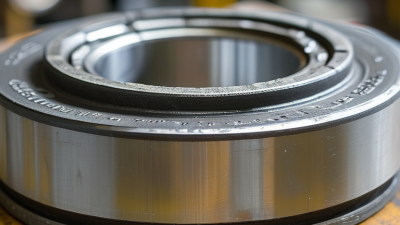
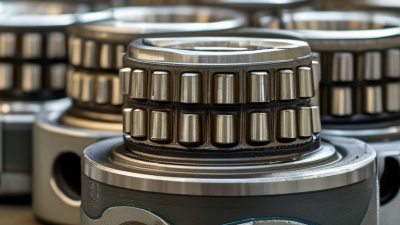
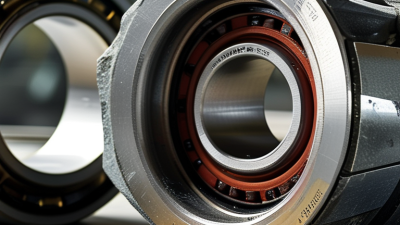
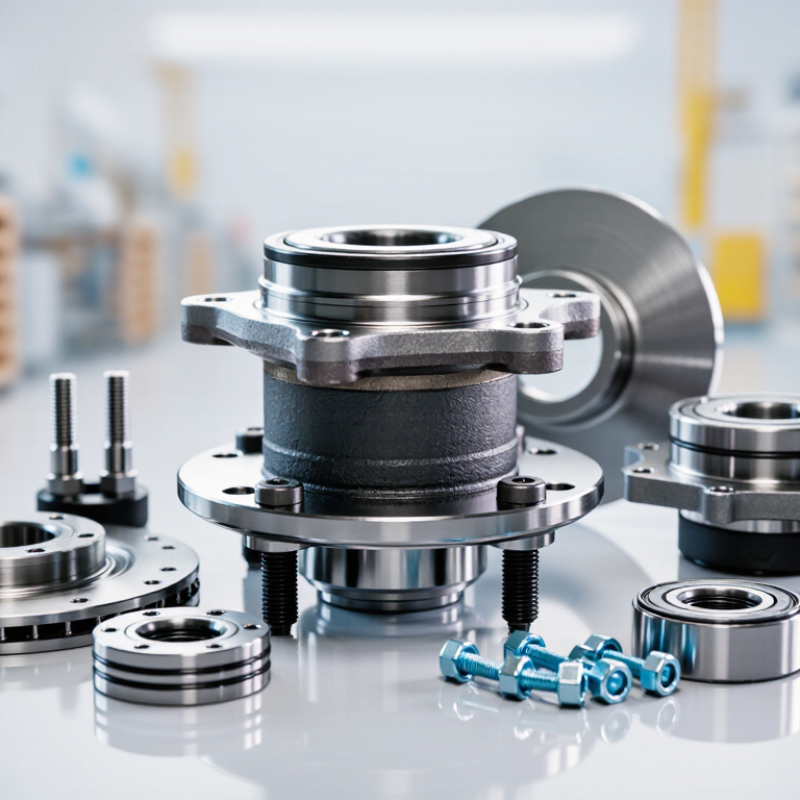
A wheel hub bearing assembly lets a vehicle’s wheel rotate while carrying radial and cornering loads. Inside, hardened steel balls or rollers run between precision-ground raceways. Seals keep grease in and water, grit, and road salt out. A magnetic encoder may also provide wheel-speed information to the anti-lock braking system. Small details matter: uneven seal contact can invite contamination and shorten bearing life.
Generation 1 assemblies are typically sealed, double-row bearing units pressed into a separate hub or knuckle. Generation 2 adds a mounting flange to one bearing ring, reducing parts and simplifying installation. Generation 3 integrates flanges on both sides, connecting the assembly more directly to the suspension and wheel. Some versions include a speed sensor or encoder; features vary by design.
The right generation depends on the vehicle, mounting space, load, and service method. During inspection, technicians can check for rough rotation, looseness, damaged seals, or unusual noise. A smooth spin is useful, but it does not prove a bearing is healthy under load. Generation labels help describe construction, yet they can oversimplify real differences. Confirm dimensions, preload requirements, and sensor compatibility before choosing a replacement.
Key Specifications: ISO 281 L10 Life, Dynamic Load Rating, and Static Load
China Top Wheel Hub Bearing Assembly Manufacturers?
When comparing wheel hub bearing assemblies, ask for the dynamic load rating, C, and the test conditions behind it. ISO 281:2007 calculates basic rating life, L10, at 90% reliability. For ball bearings, L10 = (C/P)³ million revolutions, where P is equivalent dynamic load. A higher C can indicate greater capacity, but it does not guarantee longer service in every vehicle. Tire loads, road shocks, lubrication, and installation all matter. Small details matter.
Static load needs separate attention. ISO 76:2006 defines the basic static load rating, C0, using a limited permanent deformation at the rolling contacts. Compare C0 with the expected stationary or impact load, and review the supplier’s stated static safety factor. For hub assemblies, ask whether ratings apply to the complete unit or only its bearing components. That distinction can be easy to miss. A useful supplier review checks traceable test records, dimensional tolerances, sealing performance, and the calculation inputs—not just a headline capacity figure. ISO life estimates are valuable, but real roads are uneven, and a neat spreadsheet cannot capture every failure mode.
Wheel Hub Bearing Life: Applied Load and ISO 281 L10
Illustrative ISO 281 calculation for a ball bearing with a dynamic load rating, C, of 25 kN:
L10 = (C/P)3 million revolutions, where P is the equivalent dynamic bearing load.
Values are calculated examples, not specifications for any manufacturer or product. The static load rating, C0,
is a separate specification used to assess static loading and is not part of this L10 calculation.
China’s Leading Wheel Hub Bearing Assembly Manufacturers and Product Focus
China’s leading wheel hub bearing assembly manufacturers typically focus on parts for passenger cars, light commercial vehicles, and selected heavy-duty applications. Their product ranges may include first-, second-, and third-generation hub units, depending on production capabilities. Many assemblies combine bearings, flanges, seals, and, where required, an encoder for the anti-lock braking system. Details matter.
Product focus often reflects the needs of vehicle platforms and replacement markets. A manufacturer may offer different flange patterns, bearing arrangements, sealing designs, and encoder configurations. Buyers should compare dimensions, load ratings, material specifications, and installation requirements against the vehicle application. Fit is critical. A similar-looking unit can still have the wrong sensor signal or mounting geometry.
Quality assessment goes beyond a catalogue. Ask how suppliers control heat treatment, machining tolerances, sealing, and assembly cleanliness. Request inspection records and confirm what validation tests apply to the specific product; testing practices can differ between manufacturers. Packaging and traceability also matter, especially for long-distance shipments. I would not judge capability from a polished product page alone. Clear technical answers and consistent documentation offer a more useful basis for comparison, though they cannot replace independent verification.
How IATF 16949 and PPAP Assess Automotive Supplier Quality
China Top Wheel Hub Bearing Assembly Manufacturers?
How IATF 16949 and PPAP Assess Automotive Supplier Quality
For a wheel hub bearing assembly, quality begins well before the part reaches a vehicle. IATF 16949 provides a framework for controlling processes, managing risks, and tracing materials. A capable supplier should be able to show how bearing noise, flange runout, and press-fit dimensions are monitored on the production line. Look for clear inspection records, calibrated measuring equipment, and lot-level traceability. Details matter.
PPAP adds a practical check before production approval. It typically brings together sample parts, dimensional results, material records, and process documentation. Buyers can compare these records with drawing requirements and confirm that the manufacturing process is understood. A polished file is not enough. Ask how the supplier handles a changed machining tool or an out-of-range measurement. Responses should be specific and supported by records. Still, one approved sample cannot prove every future batch will be consistent. I have seen documentation appear complete while shop-floor checks were poorly explained. That gap deserves attention. Supplier visits, follow-up audits, and ongoing defect data can help reveal whether controls work beyond the paperwork.